
Feeling sick does not always mean the same training decision. The neck rule offers a simple way to judge when to scale volume, when to rest, and when to stay out of the gym.
Recovery starts long before the next workout—it starts with the fuel coming in. Protein, micronutrients, meal timing, and food quality all affect how well the body bounces back.
Cardio can help recovery, but too much of the wrong kind can work against strength, power, and muscle. Aerobic activity works best when treated as a restoration tool—not a punishment.
Professional massage and self-massage both belong in a serious recovery system. Hands-on work, stress relief, muscle quality, and tools like The Stick all get practical attention.
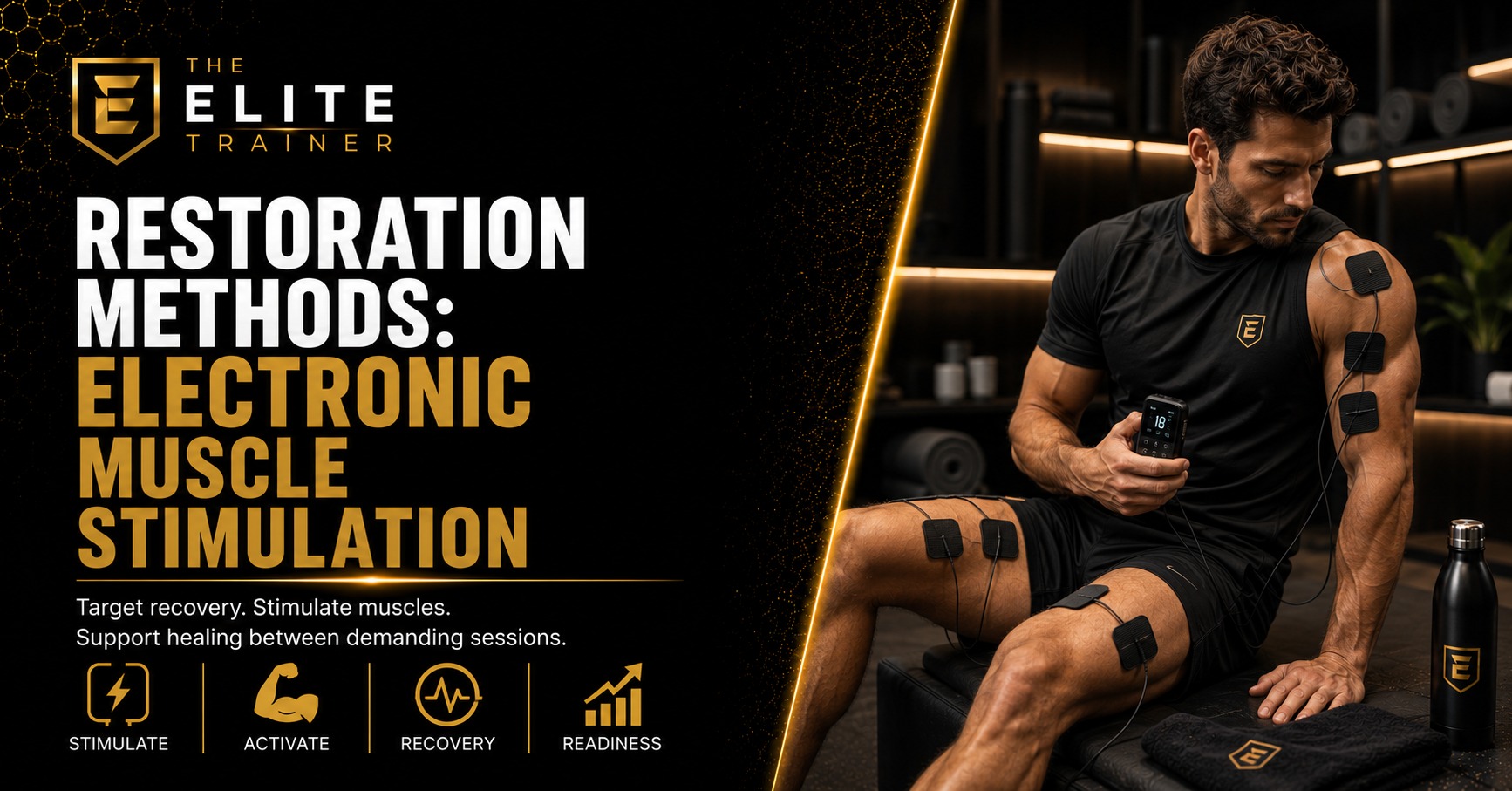
EMS is more than a gadget when used with the right intent. Strength work, recovery, pain modulation, and circulation-focused applications all have a place in the discussion.
A salt bath may be one of the simplest ways to shift from training stress into recovery mode. Epsom salts, sea salt, baking soda, and calming add-ins create an old-school restoration bath.

Contrast showers are a simple hydrotherapy tool that can fit into almost any recovery plan. Practical hot-and-cold guidelines inspired by Dr. Mel Siff make the method easier to apply.
Recovery is not a luxury add-on—it is what lets hard training keep producing results. This introduction sets the stage for a restoration series focused on practical methods to rebuild, recharge, and perform.
Foam rolling is supposed to help with pain, yet it often hurts while you do it. The useful question is how discomfort, pressure, and adaptation actually fit into the recovery process.
Some days call for discipline; others call for pulling back before the workout pulls you under. Listening to performance signals can keep training productive without turning every session into a retreat.