
Too often, research based on pathological populations is extrapolated and applied to healthy individuals. One common example is static core endurance training.
Here’s an excerpt from Shinkle et al., 2012 on the topic:
In sports, muscular demands vary greatly from athlete to athlete. This makes it very difficult to have one statement that will address all superiorities or inadequacies of the core. Currently, plank exercises are considered an adequate method of training the core for athletes to improve core strength and stability. The problem with these exercises is that they put the athletes in a nonfunctional static position that is very rarely replicated in the demands of sport-related activities. To train for the majority of sports, it requires a dynamic motion.
The same principle applies to static versus dynamic stretching, which I discuss in my Stretch for Strength video presentation. Flexibility is velocity-specific, meaning there’s little correlation between static and dynamic stretching. A martial artist, for example, might be able to kick you in the head but still struggle to reach his toes in a sit-and-reach test.
The Bottom Line
If you want to be flexible in motion, you must stretch in motion.
If you want to perform dynamically, you must train dynamically.
That said, both static and dynamic core training have their place:
✅ Static endurance training (e.g., plank and side bridge exercises) – for injury prevention
✅ Dynamic explosive training (e.g., cable woodchop, medicine ball throws) – for performance enhancement
Train smart and specific to your sport!
![Stretch for Strength [Video Presentation]](https://theelitetrainer.com/wp-content/uploads/2019/03/Stretch-for-Strength-Webinar-1024x1024.png)
Stretch for Strength [Video Presentation]
Stretch for Strength is a video presentation on smarter stretching, flexibility, and performance strategies for lifters, athletes, trainers, and coaches. Learn how to use stretching more effectively without compromising strength, power, or training results.
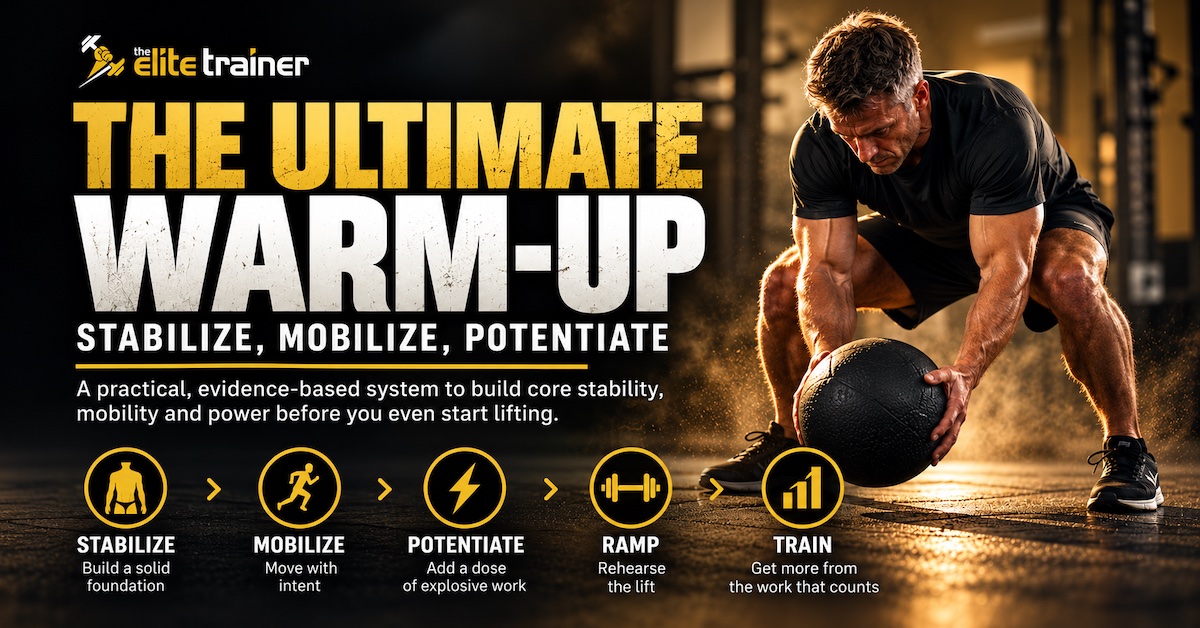
The Ultimate Warm-Up: Stabilize, Mobilize, Potentiate
Most warm-ups either do too little or become workouts of their own. This three-stage system combines core stability, dynamic mobility and explosive potentiation to prepare you for more productive strength training without creating unnecessary fatigue.

How Old Is Your Balance? What the One-Leg Stand Test Can and Can’t Tell You
Can standing on one leg reveal your ‘balance age’? Learn what the one-leg stand test really tells you about aging, fall risk and balance, and why strength still matters.
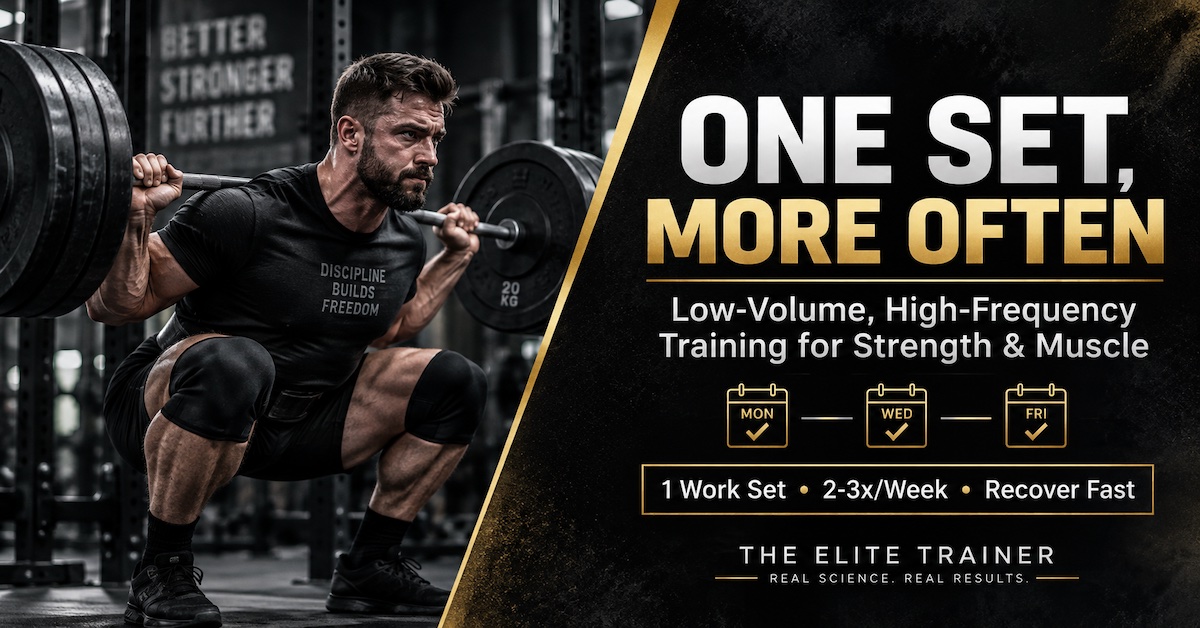
One Set, More Often: The Low-Volume, High-Frequency Method for Strength and Muscle
Can one hard set build serious strength and muscle? Discover how low-volume, high-frequency training uses quality work, faster recovery and frequent exposure to keep progress moving.