

Tendon ruptures seem to be showing up everywhere in the iron game. This post explores possible reasons lifters may be tearing more than ever.

Part three focuses on common weight-training injuries, weak links, recovery tools, and the danger of overtraining. It’s a practical injury-and-strength discussion for lifters who train hard but still need to train smart.

A shoulder-training tweak that uses an offset dumbbell grip to hit the rear delts without turning the lateral raise into an impingement trap. It’s a small change with a big payoff for balanced deltoid development.

Part five shifts from recovery to prevention, showing how smarter programming, controlled reps, and better exercise execution can help keep injuries from happening in the first place. Train sloppy long enough and the body eventually sends the bill.

Part four digs into hamstring strains and why prevention is more than throwing in a few random leg curls. It highlights eccentric strength, smart exercise selection, and better planning for athletes exposed to sprinting, jumping, and high-speed movement.

Nordic curls are brutally effective, but not everyone can control the full range right away. Accommodating assistance makes the movement more trainable while still hammering the hamstrings.

A practical coaching reminder: if an exercise does not fit the client, adjust the setup, change the variation, or choose a smarter movement.
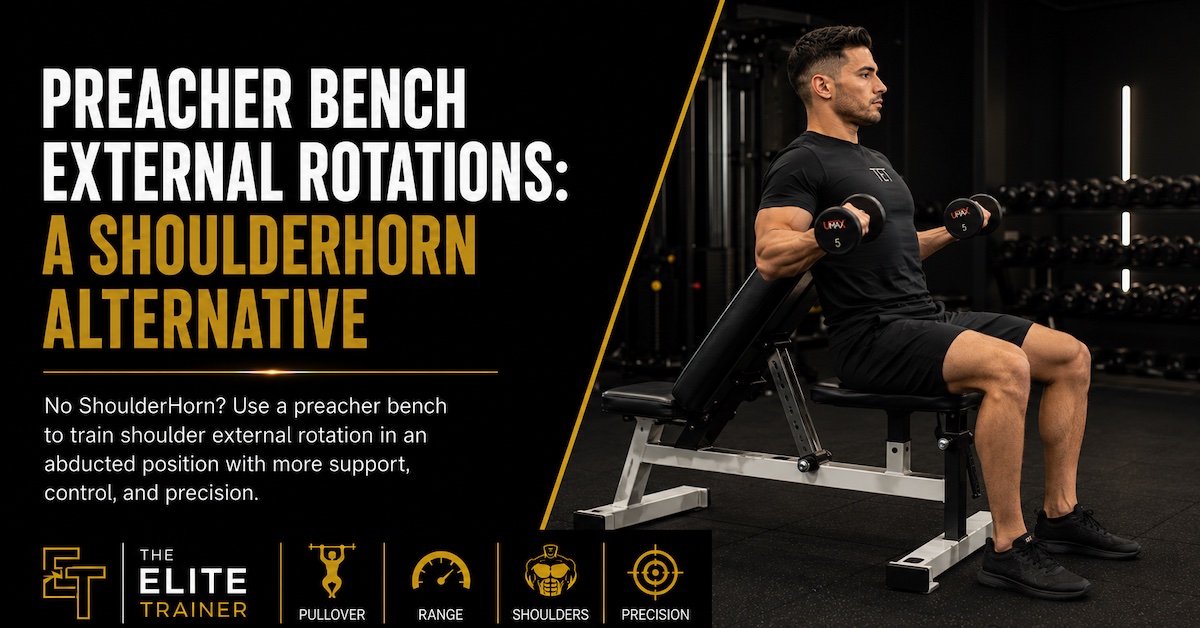
No ShoulderHorn? No problem. Use a preacher bench to train shoulder external rotation in an abducted position and target the rotator cuff with more support, control, and precision.

A cautionary post on fitness fads, exercise selection, and why training methods should match the client’s goals, history, and ability level.

Learn the essential do’s and don’ts of stretching to improve flexibility, prevent injuries, enhance range of motion, and support better strength-training performance.