

Real strength is built through progression, not random effort. These resistance-training foundations cover how to increase challenge safely, structure workouts, and keep long-term progress on track.

Chin-ups and dips are skills that reward real training, not random exercise. Amanda’s progress from zero to ten reps shows what consistent programming, recovery, and patience can do.
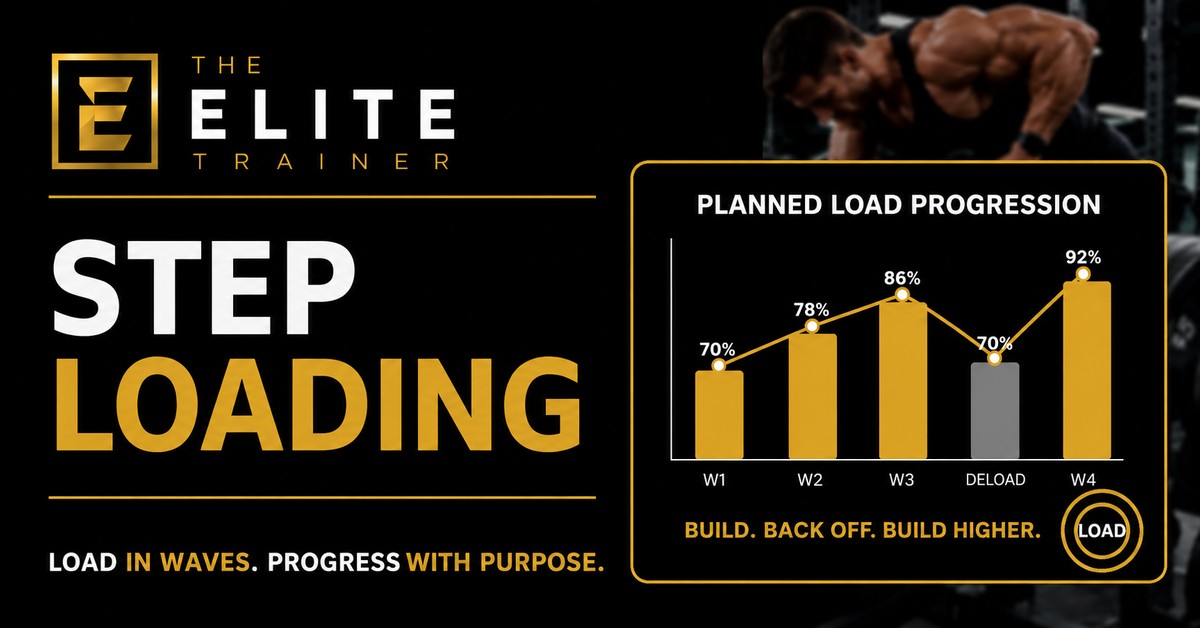
Progression doesn’t need to be complicated. Step loading gives lifters a simple way to add weight over several workouts while keeping reps steady and effort under control.

Chin-ups and dips respond to patient progression, smart loading, and consistency. Amanda and Heather’s progress shows how eccentric work can build real upper-body strength.

Progress doesn’t happen by accident. The Kaizen principle turns training into a measurable process where small, consistent improvements add up over time.

Muscle confusion sounds catchy, but progress comes from smarter programming—not random exercise chaos. Get clear on adaptation, variation, and the real reason training plateaus happen.

A strength-training strategy that flips the usual tapering model and explains how planned “desetting” can help manage fatigue without losing momentum.

More work is not always better work. This training note explains when reducing sets can protect progress, manage fatigue, and keep a program moving instead of grinding it into the ground.

Progress is hard to prove when you do not record it. John Paul explains why a training log remains one of the simplest and most powerful tools for measuring improvement.

Small loading details can change the entire effect of a program. John Paul clarifies how sequencing, load reductions, and exercise order work in the Russian approach to size and strength.