
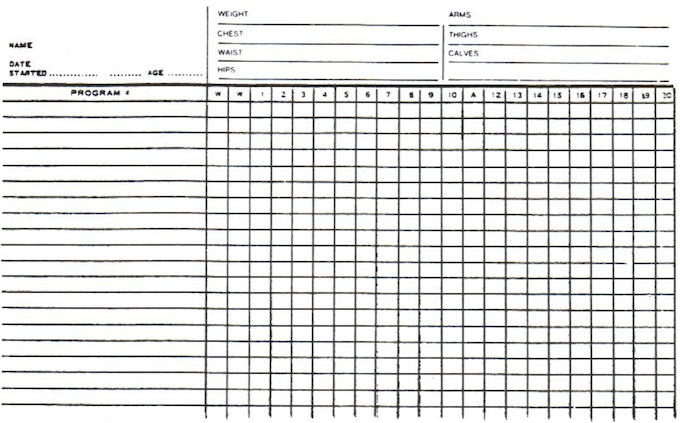
When I first started as a fitness director at a commercial gym, this was the training log they used:
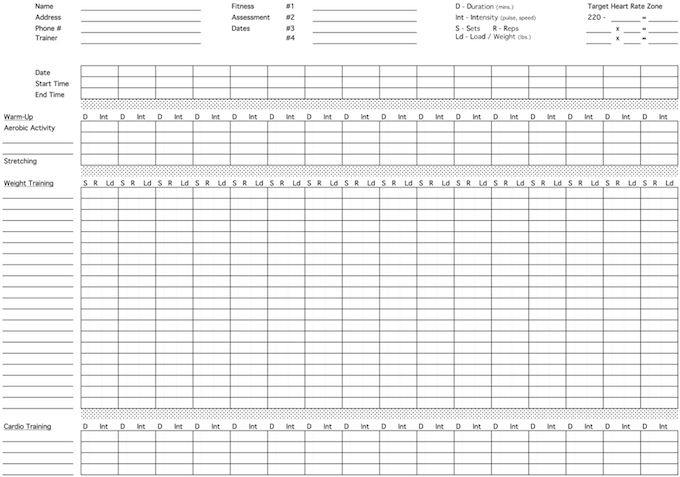
I created a more detailed version that allowed members to track their aerobic activity as well:
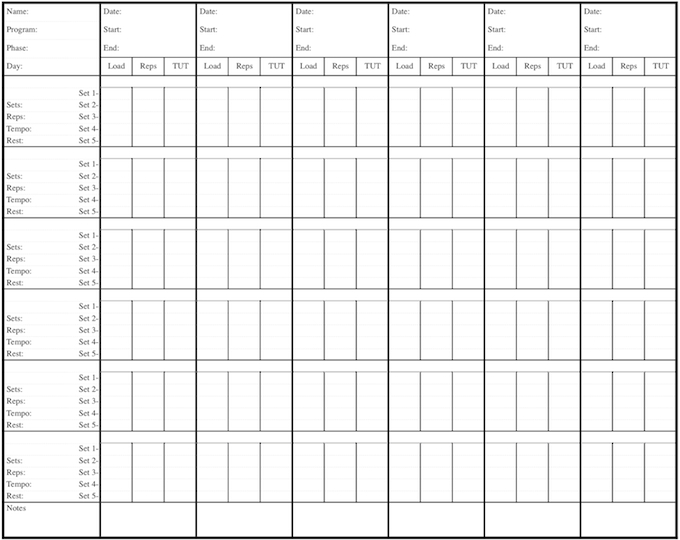
Later, I designed a log used strictly for strength training (click here for a high-res copy):
Why Keep a Training Log?
A training log is crucial for tracking progress. To truly determine whether you’re improving, you need to document every workout in detail.
At a minimum, your log should include:
- Date and start/end time of the workout
- Exercises performed
- Load used and repetitions completed
- Time under tension (TUT) for each set
Beyond the basics, additional notes can be extremely valuable. Recording details such as “feeling tired today,” “took 100 mg of caffeine pre-workout,” or “right calf strain” provides insight into how different factors impact your performance.
Tracking for Future Success
A well-maintained log doesn’t just record past workouts—it helps guide future training. Highlight successful exercises and programs while making note of necessary adjustments. Without a log, how can you possibly keep track of all these details?
Start logging your workouts today. The data you collect will be invaluable for making consistent, measurable progress.

The Ultimate Forearm Blueprint: Wrist Curls, Wrist Rollers & Grip Strength
Most lifters train their forearms as an afterthought. This complete guide covers wrist curls, reverse wrist curls, wrist rollers, radial and ulnar deviation, pronation, supination, The Formulator, and a 10-phase plan for building stronger wrists, bigger forearms, and a better grip.

The Ultimate Pull-Up Blueprint
Pull-ups are the deadlift of the upper body—but most lifters never program them with the same attention they give their major lifts. Learn how to master proper technique, progress from zero reps to weighted pull-ups, periodize your grip, protect your joints and use Swissies-SP handles to expand your training options.
Periodization vs. Programming: Are Researchers Testing the Right Thing?
Discover why many resistance training studies may not actually be testing periodization. Learn the difference between programming and periodization.