Do Not Teach Health If You Do Not Represent Health!

In his How to Eat, Move, and Be Healthy! presentation, Paul Chek mentions that the average medical doctor dies 10 years younger than their average patient. He goes on to suggest that every healthcare practitioner, including personal trainers and nutritionists, should be able to consult professionally in their underwear! In other words, they should practice what they preach—if they do not represent health, they should not be teaching health.

I completely agree.

How many out-of-shape trainers, nutritionists, dietitians, and doctors do you see giving out advice on how to get in shape? I’ve had several debates with overweight professionals who advocate for Canada’s Food Guide and other similar (high-carb, low-fat) diets for weight loss. And when I say “overweight,” I’m being polite.

It’s no different than going to a strength and conditioning coach to gain strength when that coach can barely squat or bench their own body weight. That might not be such a wise choice.

On the other side of the coin are coaches and trainers who cheat the process by taking drugs. Some even undergo cosmetic surgery. Apparently, the number one client for liposuction is someone within 10 pounds of their ideal weight—often personal trainers and fitness models. These individuals may look in shape, but they’re not necessarily healthy. Unfortunately, it’s not always easy to distinguish poor health from good appearance (see The Day a Budweiser Girl Showed Up at My Door).

They often say you can’t judge a book by its cover, but sometimes you can. Take an honest look at your healthcare provider—ask yourself if that is the type of person you would like to emulate.

55 years strong chin-up

55: Don’t Let the Old Man In

At 55, the grey hair may suggest one thing, but strength, leanness and physical capability can tell another story. A personal look at aging, health, discipline and the habits that keep the “old man” outside the door.

Read More
Your fitness tracker is not your doctor

Your Fitness Tracker Is Not Your Doctor

Wearables can reveal valuable patterns in sleep, HRV and recovery—but a score is not a diagnosis, and sometimes the data can work against you. Learn how to use Oura, WHOOP, Apple Watch and other fitness trackers without letting the algorithm overrule your body.

Read More
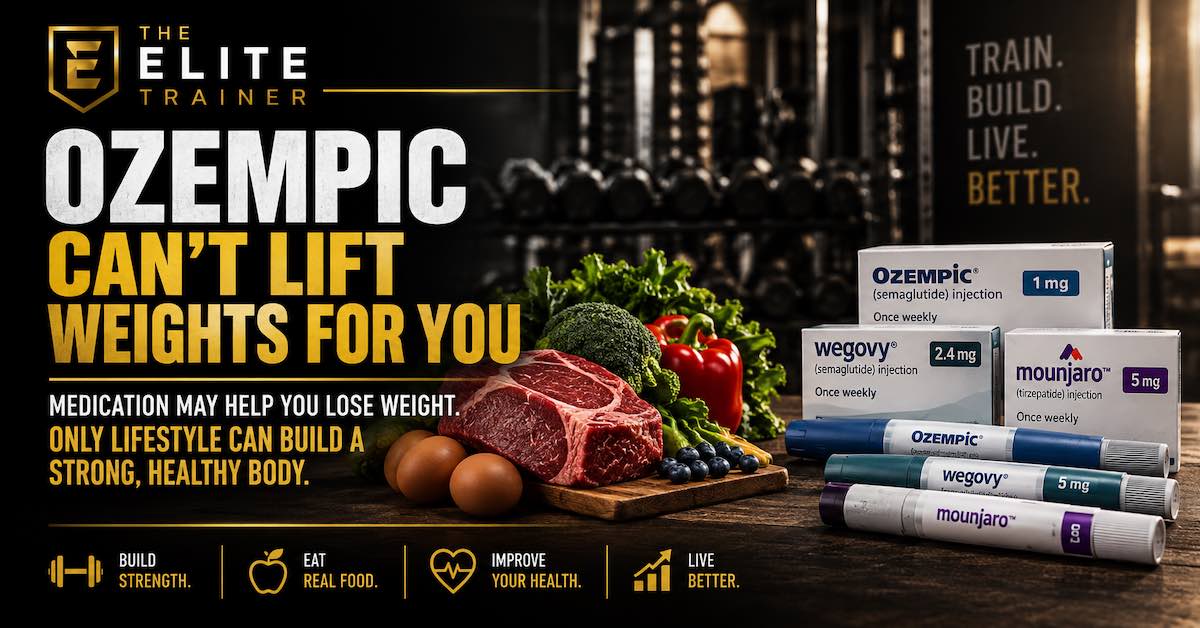
Ozempic Can't Lift Weights For You

Ozempic Can’t Lift Weights for You

Ozempic can reduce body weight—but how do you preserve muscle and strength during the process? Learn how protein, resistance training and nutrient-dense food can support body composition, physical function and healthy aging while using a GLP-1 medication.
Read More
follow
This error message is only visible to WordPress admins

Error: No feed with the ID 2 found.

Please go to the Instagram Feed settings page to create a feed.