

Leo’s first two chin-ups mark the moment the work starts paying off. Isometrics, eccentrics, and controlled progression show how beginners can move from assisted work to real reps.

Leo’s chin-up journey starts at zero, which is exactly where many clients begin. Eccentrics, consistency, and smart coaching set the foundation for real bodyweight strength.

Going from 4 to 12 chin-ups takes more than wishful thinking. Amanda’s progress shows what consistent technique work, smart progression, and full-range reps can do over time.

When strict sternum chin-ups start to fade, the set does not have to end. Lean-away chin-ups offer a smart way to extend the work while keeping the lats and upper back under pressure.

Chin-ups do not have to stall at the same grip forever. A six-month rotation using Swissies45 handles creates built-in variety for grip strength, pulling power, and muscle balance.

Chin-ups and dips are skills that reward real training, not random exercise. Amanda’s progress from zero to ten reps shows what consistent programming, recovery, and patience can do.

One-arm chin-up training needs a progression, not wishful thinking. Mixed-grip work and wrist-grip chin-ups give lifters a practical path toward the goal.

Eccentric training can build chin-up strength quickly when it is programmed with purpose. This before-and-after video shows how controlled lowering work helped turn a weak point into visible progress.

Chin-ups are often limited as much by belief as by strength. Smart progressions, mindset, and consistent practice can move a lifter from zero reps toward real upper-body strength.
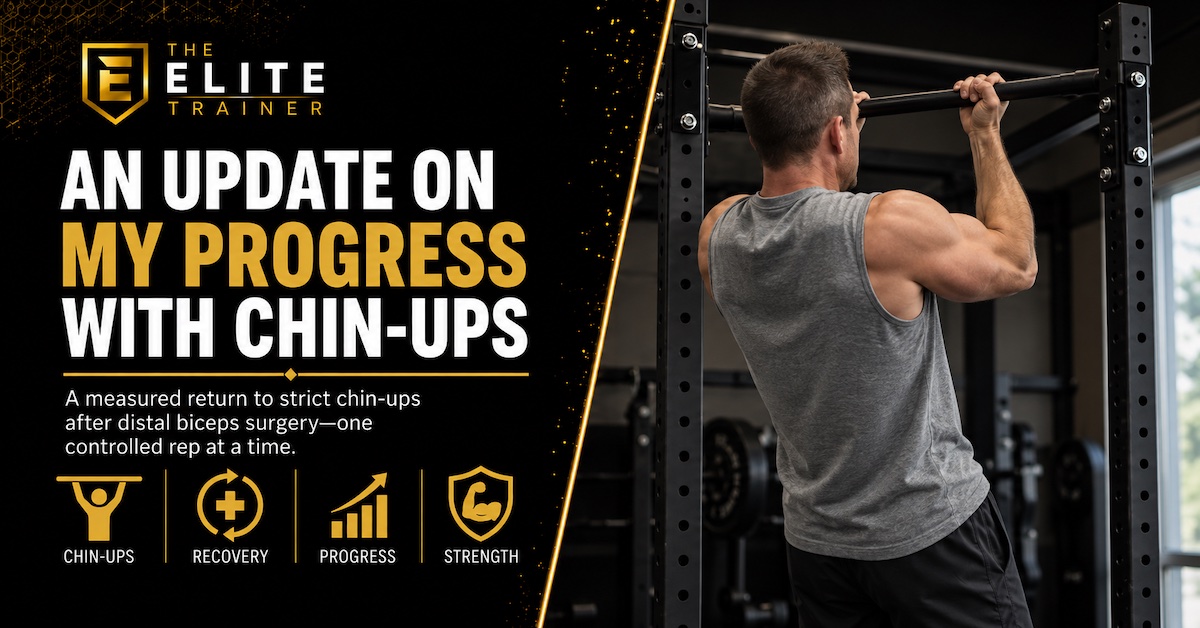
An update on returning to chin-ups after biceps surgery, with the emphasis on progressions, confidence, and rebuilding strength the right way. It’s another reminder that recovery is earned rep by rep.