
Both exercises let you train your abs through a range of motion the floor cannot provide. The real differences are stability, setup, loading and how well you execute the movement.
Put an AbMat on the floor and a Swiss ball beside it and they look like two very different pieces of equipment. From the perspective of your abdominals, however, they solve much the same problem: the floor gets in the way.
A conventional floor crunch begins with your torso essentially neutral because you cannot extend through the floor. Both the AbMat and Swiss ball place a curved surface behind the trunk, allowing you to begin from a more extended position and then curl through a greater range of motion. That alone makes both exercises valuable additions to an abdominal program.
But they are not interchangeable. The AbMat provides a stable, repeatable surface that makes technique and progressive loading easy to reproduce. The Swiss ball introduces instability, greater setup variability and more safety considerations, particularly once external resistance is added.
So which one is better?
The answer depends on what you want from the exercise.
START WITH THE RANGE OF MOTION
One of the biggest advantages of both exercises is the ability to train spinal flexion through a greater range than you can achieve on the floor. I discussed this years ago in Core Issues: Dispelling Myths and Misconceptions of Abdominal Training, Part 1, and it remains one of the main reasons I use curved surfaces for direct abdominal work.
The goal is not to throw yourself into exaggerated lumbar extension at the bottom. Allow the torso to extend naturally over the contour of the AbMat or ball, maintain control, and then initiate the repetition by gradually curling the trunk. Think of yourself as rounding over a log, with the ribs moving toward the pelvis one segment at a time.
Just as important, know where to stop. This is a crunch, not a sit-up. Once the movement begins transitioning from spinal flexion into primarily hip flexion and you are essentially sitting upright, you have gone farther than necessary. Reverse the movement under control, unroll the torso and return to the extended starting position.
That deliberate transition from extension to flexion is what makes these exercises different from repeatedly performing short-range crunches against a flat floor.
THE ABMAT: SIMPLE, STABLE AND REPEATABLE
The AbMat removes many of the variables associated with a Swiss ball. Once it is positioned correctly beneath the lumbar region, the contour remains constant from repetition to repetition. There is no rolling surface to stabilize and no need to continually find the correct position.
That makes it an excellent choice when the primary goal is straightforward abdominal training. You can concentrate on trunk flexion, control the eccentric phase and gradually increase resistance without spending energy trying to keep the apparatus underneath you.
Amanda demonstrates the exercise with the legs straight. If that position feels good on your lower back, it is an effective setup and allows you to concentrate on moving the trunk through the full available range. If the extended-leg position creates discomfort, bend the knees and place the feet flat on the floor in a hook-lying position. The change in hip and pelvic position is often more comfortable for someone who does not tolerate the straight-leg setup.
I would avoid oversimplifying this by saying that bending the knees somehow switches off the hip flexors. It does not. Research comparing different curl-up and sit-up positions suggests that knee position by itself does not completely determine abdominal or hip-flexor activity. What matters for us is more practical: choose the leg position that lets you perform controlled spinal flexion through the desired range without irritating the lower back.
I also recommend using the Original AbMat rather than a cheap imitation. This is one of those deceptively simple products where the contour, density and construction affect how the exercise feels. A piece of foam that collapses beneath you or has the wrong shape defeats much of the reason for using the implement in the first place.
THE SWISS BALL: MORE VARIABLES, MORE DEMAND
The Swiss ball provides the same basic opportunity to begin the crunch from an extended position, but now the support beneath you moves. That adds a stabilization component and makes positioning far more important.
This is where the research becomes especially interesting. In a study comparing a traditional crunch with two Swiss-ball positions, abdominal activity changed dramatically depending on where the ball was located beneath the torso. With the ball positioned high near the shoulder blades, abdominal activity was actually lower than during the traditional crunch. Move the ball down toward the lower lumbar region and activity increased substantially. On average, abdominal activity approximately doubled when the ball was moved from the upper-back position to the lower-back position.¹
That is a great example of why simply saying “Swiss ball crunch” does not tell us enough.
Ball placement matters.
Position yourself so the ball supports the lumbar region and allows the torso to extend comfortably around its contour. If you lie too far back over the ball, you may reduce the mechanical challenge you were trying to create. Too far forward and the position becomes awkward and unnecessarily unstable.
Other research comparing curl-ups on stable and labile surfaces has likewise shown that the moving surface can increase abdominal activation and alter how the muscles co-contract to stabilize the trunk.² But that does not mean instability automatically makes an exercise superior.
Instability is a variable, not a virtue.
If the instability helps create the challenge you want, use it. If it prevents you from loading the target musculature effectively or maintaining good technique, it has stopped being an advantage.
For a refresher on the exercise itself, see my Swiss Ball Crunch demonstration.
INFLATION AND PLACEMENT ARE PART OF THE EXERCISE
A Swiss ball that is half-deflated changes the geometry of the movement. Instead of providing a firm spherical surface for the trunk to extend around, it collapses beneath your body and reduces the consistency of the exercise.
Use the correct-size ball and inflate it properly. You want enough firmness that the ball maintains its shape under your bodyweight while still allowing you to conform naturally to its surface.
The same attention should be given to your body position. Once you find the correct placement, keep it consistent from set to set. A small change in where the ball sits beneath you can turn the exercise into a substantially different movement.
This is another area where the AbMat has an advantage: there are simply fewer variables to get wrong.
DO NOT CHEAP OUT ON A SWISS BALL
There is also a practical difference between these two pieces of equipment that has nothing to do with abdominal physiology.
If an AbMat fails, you have a bad piece of foam.
If a Swiss ball fails while your spine is extended over it and you are holding a dumbbell across your chest, the consequences can be considerably more serious.
I discuss this type of equipment risk in Invincible: Injury Prevention for Weight Lifters. I favour a high-quality anti-burst ball, but “anti-burst” should never be interpreted as indestructible. Inspect the surface periodically, keep it away from sharp objects and replace it if you see damage or deterioration.
This is not a piece of gym equipment where saving ten or twenty dollars should be the priority. I discuss a good Swiss ball option in The Future of Personal Training.
That becomes even more important when you begin loading the exercise. If you use substantial external resistance and need additional security, the feet can be anchored beneath a solid, immovable support. Just understand the tradeoff: fixing the feet can change the mechanics and encourage greater hip flexor involvement. Research examining curl-up and sit-up variations found that foot fixation increased rectus femoris activity while reducing activity at several abdominal sites.³
In other words, anchor yourself when the load and safety of the setup demand it, not because fixing the feet somehow makes the crunch more effective for the abs.
SO WHICH ONE IS BETTER FOR BUILDING ABS?
If the question is strictly which exercise produces more abdominal EMG, the answer is not as simple as “Swiss ball.” As the ball-placement research demonstrates, a poorly positioned Swiss ball can actually produce less abdominal activity than a traditional crunch, while a properly positioned one can produce considerably more.¹
More importantly, EMG is not a muscle-growth scoreboard. It tells us something useful about the electrical activity of a muscle during an exercise, but it cannot tell us which exercise will unquestionably produce greater abdominal hypertrophy over months or years.
For practical strength training, I care more about whether an exercise allows you to create substantial tension, move through an appropriate range, control the eccentric phase and progressively overload the musculature while maintaining good technique.
Both exercises can accomplish that.
For most lifters interested primarily in developing the rectus abdominis, I would make the AbMat the default and use the Swiss ball as another useful variation rather than assuming the unstable option is inherently more advanced or effective.
STRAIGHT LEGS OR BENT KNEES?
This is one of those details that is often turned into a rule when it should really be treated as an individual adjustment.
If you can perform the AbMat crunch comfortably with straight legs, use that position. If extending the legs creates unwanted discomfort or excessive arching through the lower back, bend the knees and use the hook-lying position. What matters is your ability to control the pelvis and trunk while moving through the range you are trying to train.
Research comparing bent- and straight-knee variations has not shown a simple “one position turns the hip flexors off” effect.³ That should steer us away from rigid rules and back toward good coaching.
The abdominal muscles should be producing the movement you see. If you find yourself jerking the torso forward, driving aggressively through the legs or turning the final half of every repetition into a sit-up, adjust the setup.
MAKE IT A CRUNCH, NOT A SIT-UP
This may be the single most important technical cue in the article.
Start in controlled extension over the curved surface. Initiate the repetition by flexing the trunk rather than throwing the shoulders forward. Imagine the rib cage gradually folding toward the pelvis as the spine rounds.
Stop when continuing upward would require you to pivot substantially at the hips. Then reverse the sequence. Do not simply fall backward onto the ball or mat. Control the eccentric phase, gradually extend the spine and allow the abdominals to lengthen before initiating the next repetition.
Performed this way, even an apparently small crunch becomes much harder than the momentum-driven repetitions many people perform on the floor.
LOAD IT, BUT EARN THE LOAD
Bodyweight is enough until you can control the full range without using momentum. Once that becomes easy, resistance can be added by holding a dumbbell, plate or medicine ball near the chest.
As strength improves, you can progressively increase the load or alter the lever arm, but there is no benefit to making the exercise heavier if the additional weight shortens the range or turns the movement into a hip-flexion exercise.
An advanced progression of this concept is the Sicilian Crunch. You perform the concentric portion with the resistance held close to the body, then extend the arms at the top before slowly lowering through the eccentric phase. Moving the load farther away from the torso increases the lever arm and dramatically increases the challenge on the descent.
It is an excellent exercise, but earn your way there. Master the basic crunch before manipulating leverage.
THE BOTTOM LINE
The AbMat and Swiss ball are not really competing pieces of equipment. They are two ways to solve the same limitation of the conventional floor crunch: the floor prevents you from beginning the movement in trunk extension.
The AbMat provides the more stable and repeatable environment, which makes it particularly useful for progressive abdominal strength work. The Swiss ball gives you the same opportunity for greater range of motion while adding instability, but ball placement, inflation, equipment quality and setup all become part of the exercise.
If I had to choose one for most lifters, I would start with the AbMat. If you already have good control and want another way to challenge the movement, the Swiss ball is an excellent option.
Whichever one you choose, remember what actually makes the exercise productive:
Use the full available range. Control both directions. Progress the resistance. And make every repetition a crunch, not a sit-up.
The equipment provides the curve.
You still have to provide the tension.
ADDITIONAL READING
Core Issues: Dispelling Myths and Misconceptions of Abdominal Training, Part 1
Core Issues: Dispelling Myths and Misconceptions of Abdominal Training, Part 2
REFERENCES
- Sternlicht E, Rugg S, Fujii LL, Tomomitsu KF, Seki MM. Electromyographic comparison of a stability ball crunch with a traditional crunch. Journal of Strength and Conditioning Research. 2007;21(2):506–509. doi:10.1519/R-20436.1.
- Vera-Garcia FJ, Grenier SG, McGill SM. Abdominal muscle response during curl-ups on both stable and labile surfaces. Physical Therapy. 2000;80(6):564–569.
- Parfrey KC, Docherty D, Workman RC, Behm DG. The effects of different sit- and curl-up positions on activation of abdominal and hip flexor musculature. Applied Physiology, Nutrition, and Metabolism. 2008;33(5):888–895. doi:10.1139/H08-061.
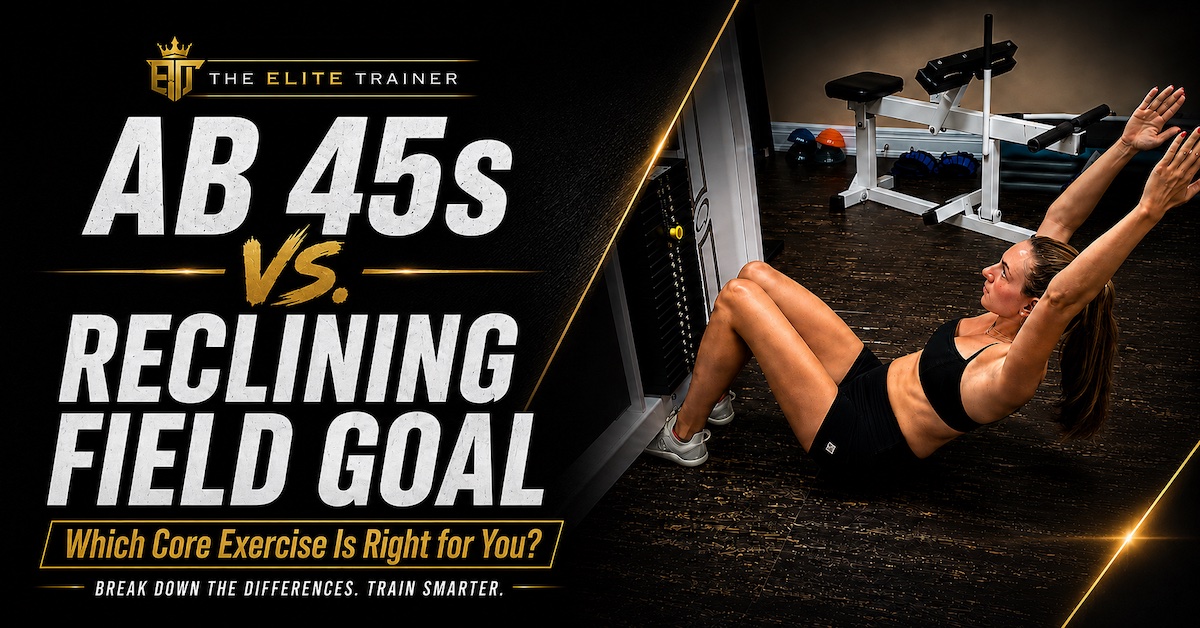
Ab 45s vs. the Reclining Field Goal: Which Core Exercise Is Right for You?
Ab 45s and the Reclining Field Goal may look similar, but they create very different core-training demands. Discover which exercise places greater emphasis on the hip flexors, which is easier to scale, and how to choose the right one for your goals.
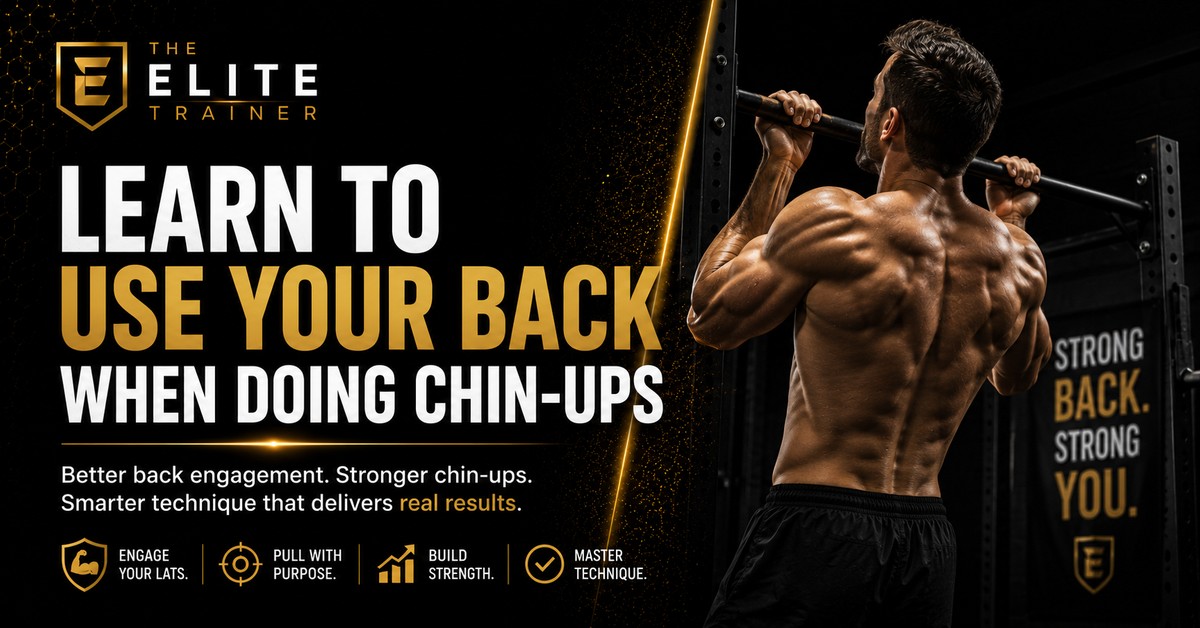
Learn to Use Your Back When Doing Chin-Ups
Chin-ups are a back exercise first, but many lifters turn them into an arm-dominant grind. Better intent, setup, and execution help the lats do the job they are built to do.
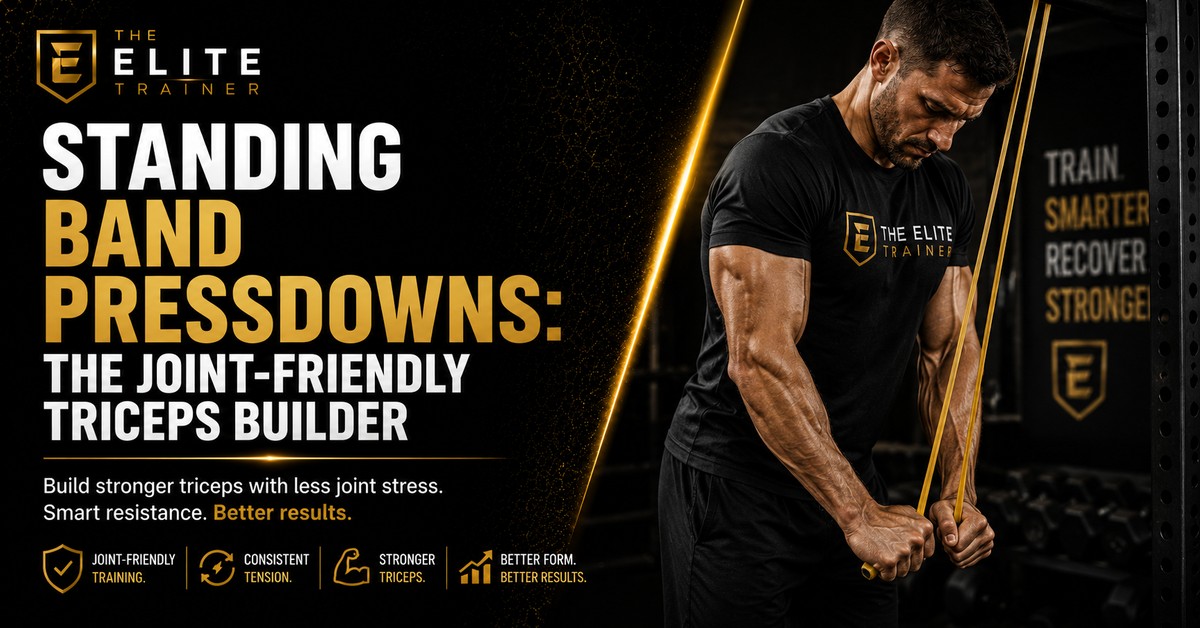
Standing Band Pressdowns: The Joint-Friendly Triceps Builder
Standing band pressdowns give the triceps hard work without beating up the elbows. The setup is simple, portable, and useful for lifters who need a joint-friendlier arm option.
follow
Error: No feed with the ID 2 found.
Please go to the Instagram Feed settings page to create a feed.