
This article is adapted from concepts presented in my new book, The Personal Trainer’s Blueprint for Assessments.
After more than 30 years in the fitness industry, I’ve seen personal trainers make the same assessment mistakes over and over again.
Ironically, most of them come from trying to do too much rather than too little.
Many trainers believe that a comprehensive personal trainer assessment must involve dozens of tests, movement screens, and corrective exercise protocols.
Fitness assessments are meant to guide training, but somewhere along the way they became overly complicated systems filled with endless screens and checklists.
In many cases, trainers end up spending more time assessing than actually training.
That’s a problem.
Mistake #1: Trying to Diagnose Dysfunction
Fitness professionals are not medical practitioners.
Yet many assessment systems attempt to identify dysfunctions, imbalances, or structural issues that are well outside the scope of practice of a personal trainer.
Your role is not to diagnose problems.
Your role is to train people effectively.
A good assessment should help you determine:
- What a client can safely do
- What they need to improve
- Where to start their training program
Anything beyond that belongs in the realm of healthcare professionals.
Mistake #2: Too Many Tests in a Personal Trainer Assessment
Another common mistake is conducting too many tests.
Some trainers run clients through 10, 15, or even 20 different assessments before beginning a program.
The result?
Clients get overwhelmed, trainers get lost in the data, and the training process becomes unnecessarily complicated.
A good assessment system focuses on a few key qualities:
- Strength
- Power
- Balance
- Movement competency
Once those are understood, the program can begin.
Mistake #3: Treating Assessments as a One-Time Event
Assessments shouldn’t happen only during the first session.
The best trainers test while training.
You observe how clients move during exercises, adjust the program accordingly, and track improvements over time.
Training itself becomes the assessment process.
Mistake #4: Forgetting the Goal
The goal of assessment isn’t to produce a perfect evaluation.
The goal is to create better training programs.
If the assessment process becomes more complicated than the training itself, something has gone wrong.
A Simpler Approach
Over the last three decades I’ve refined a practical system that focuses on what truly matters.
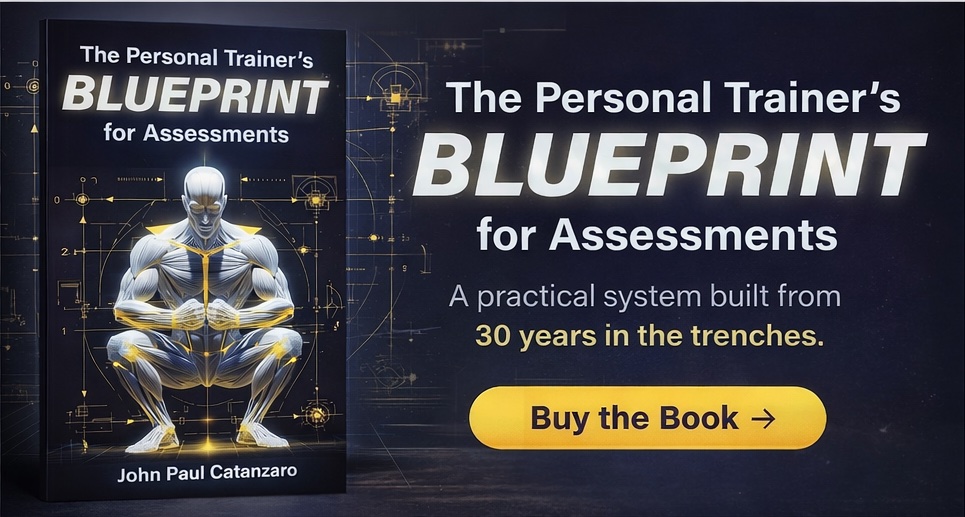
Instead of complicated diagnostic frameworks, the system focuses on simple, effective testing protocols that personal trainers can actually use in the real world.
That’s exactly what I outline in my new book, The Personal Trainer’s Blueprint for Assessments.
It presents a streamlined approach to assessing clients without unnecessary complexity, while still gathering the information needed to design effective programs.
If you’re a trainer who wants a clear, practical framework for assessing clients, you’ll find the full system inside the book.
Want the Complete Assessment System?
The full framework is explained step-by-step in my book:
The Personal Trainer’s Blueprint for Assessments
👉 View the book here: https://www.amazon.com/dp/1069882208

I Don’t Plan to Retire in Four Years… But I Could If I Wanted To
After 30 years in the fitness industry, John Paul Catanzaro explains why personal trainers must plan financially, build a sustainable business, and invest consistently for long-term success.
Thirty Years as a Personal Trainer: A Day in the Life of a Seasoned Coach
What does a real day look like after 30 years in the fitness industry? Here’s a behind-the-scenes look at coaching,
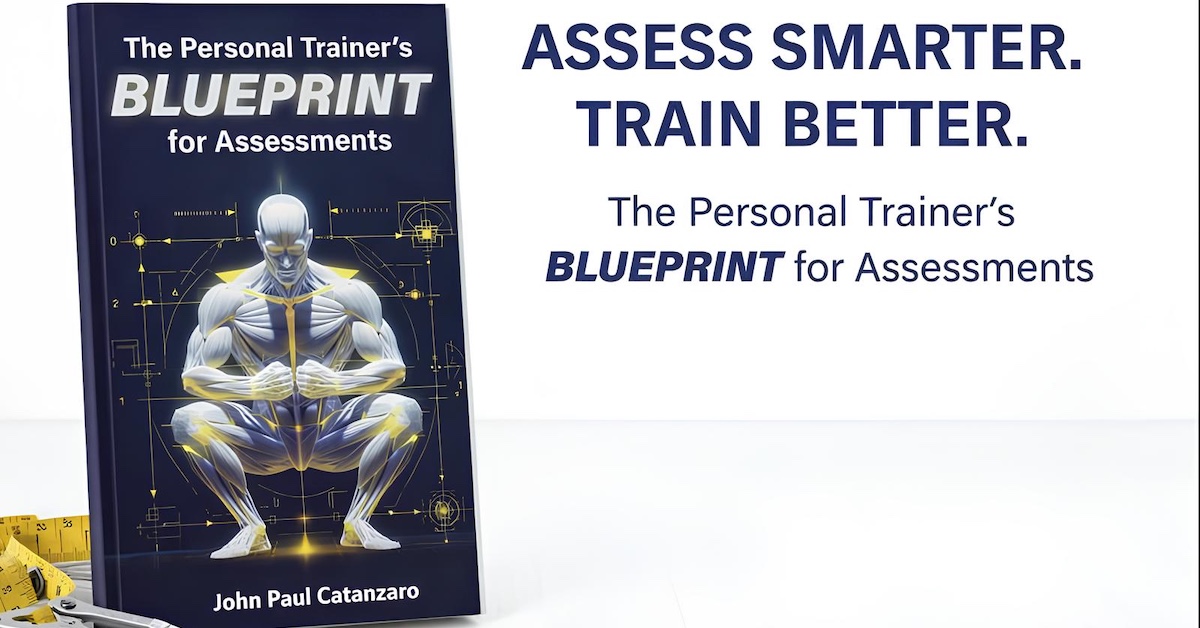
The Personal Trainer’s Blueprint for Assessments: 30 Years in the Making
In 2026, I celebrate 30 years in business as a personal trainer. That milestone didn’t come from chasing trends, copying