
What TRT can do, what it cannot do, and why chasing the highest testosterone number can miss the point.
Few subjects in men’s health generate as much enthusiasm, confusion and outright dogma as testosterone.
For decades, testosterone therapy was treated by many physicians as something inherently dangerous, particularly for the prostate and cardiovascular system. More recently, the pendulum has swung dramatically in the opposite direction. Testosterone clinics are everywhere. Social media is filled with men comparing blood work, injection schedules, free testosterone levels and physiques. In some circles, testosterone replacement therapy has gone from something men were afraid to discuss to something they are afraid of missing out on. Both extremes create problems.
Testosterone is neither poison nor a fountain of youth. For a man with genuine testosterone deficiency, appropriately prescribed testosterone replacement therapy can improve important aspects of health and quality of life. At the same time, the fact that testosterone can build muscle, increase strength and improve body composition does not mean that continually pushing testosterone higher produces better health. That matters enormously to anyone who trains.
Replacement is not the same thing as enhancement.
The goal should not be to see how high you can drive a laboratory number. The goal should be to restore healthy physiology, improve the symptoms that brought you to treatment in the first place, and accomplish that without creating unnecessary problems elsewhere.
In other words, when it comes to TRT, optimal beats maximal.
START WITH THE RIGHT QUESTION
The first mistake is asking, “What is my testosterone level?”
The better question is, “Do I actually have testosterone deficiency?”
Low energy, reduced libido, erectile difficulty, declining strength, poorer recovery, depressed mood, loss of muscle and increased body fat can all occur with testosterone deficiency. Unfortunately, they can also occur with inadequate sleep, obesity, chronic stress, excessive caloric restriction, sleep apnea, illness, medications, depression and numerous other conditions.
That is why current endocrine guidelines continue to emphasize that testosterone deficiency is a clinical and biochemical diagnosis. Symptoms should be present, and testosterone should be consistently low when measured properly. The Endocrine Society’s July 2026 statement again stressed that symptoms alone are not diagnostic and that low testosterone should be confirmed with accurate laboratory testing.
For most men, that means testing total testosterone on two separate mornings, preferably while fasting and when you are not acutely ill. If total testosterone is borderline, or if sex hormone binding globulin (SHBG) is unusually high or low, free testosterone becomes particularly useful. Obesity and diabetes can lower SHBG and make total testosterone appear lower even when free testosterone remains adequate. Aging and certain other conditions can produce the opposite problem.
The investigation should not end there. Luteinizing hormone and follicle stimulating hormone can help distinguish whether the problem originates primarily in the testes or higher up in the hypothalamic-pituitary system. Depending on the circumstances, thyroid function, prolactin, medications, body composition, sleep, nutrition and other health issues may deserve attention as well.
I have advocated this philosophy for years: fix what can be fixed before immediately reaching for a prescription.
Eat properly. Strength train. Sleep. Reduce excess body fat if necessary. Correct obvious nutritional problems. Address sleep apnea. Review medications that may suppress testosterone. The AUA and Endocrine Society both recognize lifestyle intervention as an important part of managing men with low testosterone, and the Endocrine Society specifically identifies weight loss as first-line therapy for many men whose hypogonadism is associated primarily with obesity.
Sometimes those measures are enough. When they aren’t, and genuine testosterone deficiency remains, that is where replacement therapy belongs.
REPLACEMENT IS NOT ENHANCEMENT
This distinction becomes particularly important for people who lift weights. Testosterone has dose-responsive anabolic effects. Classic research by Shalender Bhasin and colleagues demonstrated that progressively greater testosterone exposure can produce progressively greater increases in lean body mass, muscle size and strength. That helps explain why a man who feels better and trains better after beginning TRT may be tempted to keep pushing the dose upward.
But maximizing an anabolic response and optimizing long-term health are not necessarily the same objective.
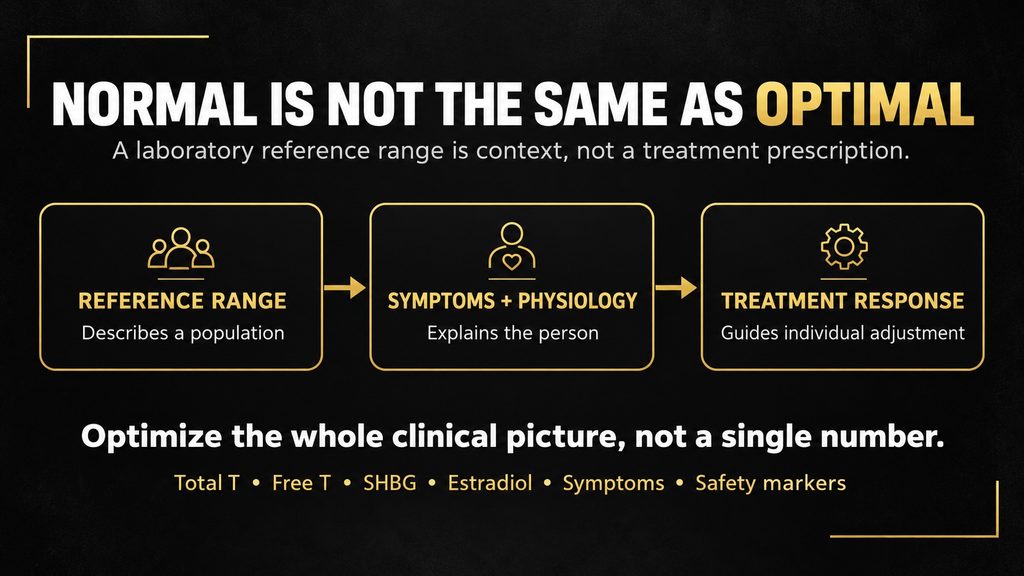
This is also where the subject of the “normal range” becomes more complicated than looking at the numbers printed beside a blood test. Current endocrine guidelines generally recommend restoring testosterone into a normal physiological range while evaluating symptoms, free testosterone when appropriate, treatment response and safety markers. They do not establish one perfect number that applies to every man.
Dr. Keith Nichols takes that argument further. He points out that testosterone reference ranges have changed considerably over time and that older laboratory ranges sometimes extended well above 1,000 ng/dL. He has discussed an upper limit of approximately 1,500 ng/dL on laboratory testing when he was originally evaluated. He therefore questions whether today’s lower population-based reference intervals should automatically define what is physiologically optimal for every symptomatic man.
A reference range describes a population. It does not automatically identify the ideal concentration for a particular individual.
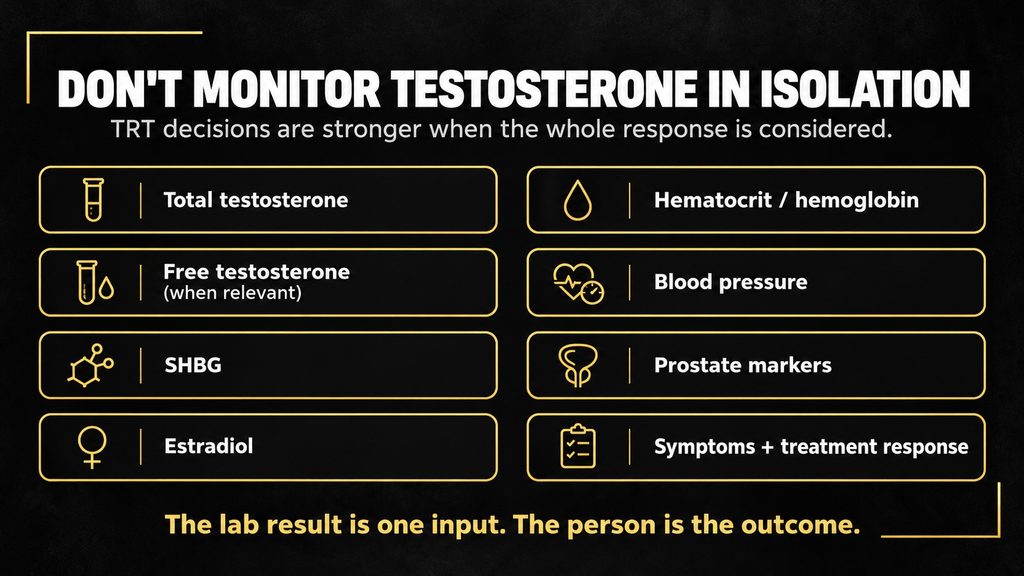
The more useful objective is symptom resolution and healthy function while monitoring total testosterone, free testosterone when relevant, SHBG, estradiol, hematocrit, blood pressure, prostate health and the other variables affected by treatment. Some men may feel and function well at concentrations that another man finds inadequate. Pharmacokinetics matter as well. A blood draw taken at the peak after an injection cannot be interpreted the same way as a trough measurement before the next dose.
That gives us a much better definition of optimization: use enough testosterone to produce the desired clinical benefit, then resist turning treatment into a contest to see how high the number can go.
WHAT CAN TRT ACTUALLY DO?
For appropriately selected men with genuine hypogonadism, the benefits are real. Clinical trials have demonstrated improvements in sexual activity and sexual desire, along with more modest improvements in mood and some measures of physical function. Testosterone can increase lean mass, reduce fat mass, improve bone mineral density and correct anemia in some men.
That does not mean every symptom improves dramatically, nor does improvement in a surrogate marker automatically guarantee a better long-term outcome. The bone findings provide a good example. Testosterone can improve bone density, yet the large TRAVERSE fracture analysis did not demonstrate fewer fractures among men receiving testosterone.
That principle is worth remembering throughout this discussion. Better numbers are useful when they translate into better health and function. The objective is not beautiful blood work. The objective is a healthier person.
MYTH: TESTOSTERONE CAUSES PROSTATE CANCER
This may be the biggest testosterone myth of all.
For much of modern medical history, physicians were taught that giving testosterone to a man was essentially pouring gasoline on a prostate-cancer fire. Dr. Abraham Morgentaler has spent decades challenging that assumption, and his work helped develop what became known as the saturation model.
The simplified idea is that prostate tissue responds strongly to changes in androgen availability at very low testosterone levels, but that response appears to become increasingly saturated as androgen concentrations rise. Once androgen receptors are substantially occupied, additional testosterone does not necessarily create a proportional increase in prostate stimulation.
Recent randomized data have become reassuring as well.
In the prostate-safety analysis of TRAVERSE, more than 5,000 carefully screened men with hypogonadism were followed, and rates of high-grade prostate cancer, overall prostate cancer, acute urinary retention and several other prostate outcomes were low and did not differ significantly between testosterone and placebo groups. Importantly, men with elevated PSA or severe urinary symptoms were excluded, so those findings should not be generalized indiscriminately to every man.
The regulatory approach is also changing. In June 2026, the FDA requested revisions to testosterone labeling after reviewing newer clinical evidence. The proposed changes would remove the previous broad prostate-cancer warning and make metastatic prostate cancer the principal cancer-related contraindication, while still emphasizing appropriate screening and monitoring. Long-term uncertainty remains because prostate cancer can take many years to develop.
That is very different from saying, “Testosterone is completely irrelevant to prostate cancer.”
It means the old simplistic belief that restoring testosterone in a deficient man automatically causes prostate cancer is no longer supported by the weight of evidence.
MYTH: TRT AUTOMATICALLY DAMAGES YOUR HEART
For years, cardiovascular concerns were one of the major reasons physicians hesitated to prescribe testosterone.
Then came TRAVERSE. The randomized trial enrolled more than 5,200 men aged 45 to 80 who had symptoms of hypogonadism, two testosterone measurements below 300 ng/dL, and either established cardiovascular disease or elevated cardiovascular risk. Testosterone gel was adjusted to maintain concentrations between 350 and 750 ng/dL.
Major cardiovascular events occurred in 7.0% of testosterone-treated men and 7.3% of men receiving placebo. Testosterone was therefore noninferior to placebo for cardiovascular death, nonfatal myocardial infarction and nonfatal stroke.
That was important enough that the FDA removed its boxed-warning language about increased cardiovascular risk in 2025. Further labeling changes followed in 2026.
But once again, “not worse” should not become “cardioprotective.” TRAVERSE also reported higher incidences of atrial fibrillation, acute kidney injury and pulmonary embolism in the testosterone group. Separate postmarketing studies also showed that some testosterone formulations increase blood pressure, leading the FDA to require blood-pressure information on product labels.
The sensible conclusion is neither “TRT causes heart attacks” nor “TRT protects your heart.”
For appropriately diagnosed men treated within physiological ranges and properly monitored, the best randomized evidence is reassuring regarding major cardiovascular events. Blood pressure, hematocrit, cardiovascular risk factors and individual response still matter.
ESTRADIOL IS NOT THE ENEMY
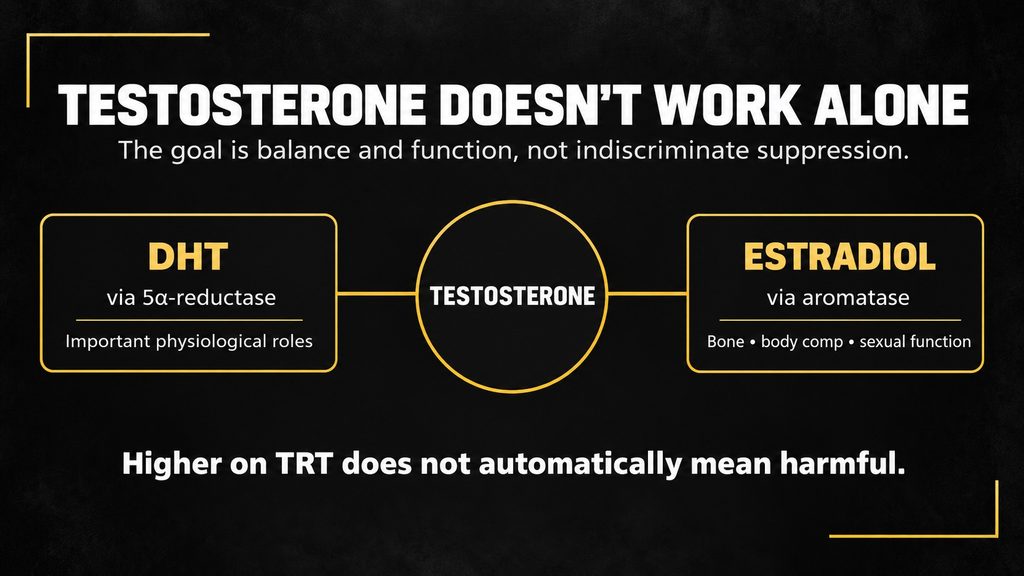
Testosterone does not work in isolation. Some testosterone is converted into dihydrotestosterone, or DHT, through 5-alpha-reductase, while some is converted into estradiol through aromatase. Both metabolites have physiological roles, which is why automatically trying to suppress them simply because testosterone therapy increased them can create a new problem.
Men need estrogen signaling. Estradiol contributes to bone health, body composition, sexual function and several other physiological processes. This is one of the central arguments in Dr. Nichols’ presentation. Rather than reflexively treating a laboratory value, he argues that the clinician should consider symptoms, physiology and the complete hormonal environment.
That does not mean estradiol can never become clinically relevant. Breast tenderness, gynecomastia or other symptoms deserve investigation. It means that routinely prescribing an aromatase inhibitor simply because estradiol increased alongside testosterone is not automatically good hormone management.
Suppress estrogen too aggressively and you may undermine some of the benefits you were trying to obtain from testosterone in the first place.
THE NUMBERS THAT MATTER BESIDES TESTOSTERONE
One of the ironic mistakes in testosterone therapy is becoming so obsessed with testosterone that you stop watching everything else.
Hematocrit is a perfect example. Testosterone stimulates red-blood-cell production. That can be helpful in a man with anemia, but it can become a problem when hematocrit rises too far. Major guidelines recommend measuring hematocrit before treatment and periodically afterward. A hematocrit around 54% is commonly used as the point where treatment should be reassessed, adjusted or temporarily interrupted.
Injectable testosterone tends to produce a greater erythrocytosis effect than many shorter-acting transdermal formulations, particularly when injections produce large peaks. Pellets may also increase hemoglobin and hematocrit substantially in susceptible patients.
Blood pressure deserves attention as well. So do PSA and prostate symptoms when appropriate, along with the symptoms that prompted treatment in the first place.
That last point is often forgotten. If testosterone reaches an excellent number but the patient feels no better, what exactly are we treating?
The AUA explicitly advises reconsidering therapy when testosterone has normalized but symptoms have not improved.
Treat the patient. Use the laboratory work to help you do it. Do not treat the laboratory sheet.
TRT CAN SUPPRESS FERTILITY
Another misconception worth eliminating is that replacing testosterone somehow helps the testes produce more testosterone. Usually, the opposite occurs.
Exogenous testosterone creates negative feedback at the hypothalamus and pituitary. Luteinizing hormone (LH) and follicle stimulating hormone (FSH) decline, intratesticular testosterone falls and sperm production can decrease dramatically or, in some men, stop altogether. That is why reproductive guidelines advise against prescribing exogenous testosterone to men who are actively trying to conceive or planning to do so in the near future.
This does not mean a man with low testosterone who wants children has no hormonal options. Human chorionic gonadotropin (hCG) acts much like LH, stimulating the Leydig cells in the testes to produce testosterone. Controlled research has shown that relatively low-dose hCG can maintain intratesticular testosterone even when exogenous testosterone has strongly suppressed LH and FSH. Smaller clinical studies have also reported preservation of spermatogenesis in some men receiving hCG alongside TRT.
That makes hCG an important tool, but not a fertility guarantee. Current AUA/ASRM guidance notes that the evidence for routinely adding hCG to exogenous testosterone specifically to preserve future fertility remains limited. For a man actively pursuing pregnancy, hCG, selective estrogen receptor modulators such as clomiphene, FSH-based therapy or combinations of these approaches may be more appropriate than standard exogenous TRT, depending on the cause of his testosterone deficiency and fertility status.
A 35-year-old man who wants children in two years therefore has a very different decision to make than a 65-year-old man with completed fertility. Fertility goals should be discussed before the first injection, cream application or pellet insertion, not after sperm production has already fallen.
THE DELIVERY METHOD MATTERS
Not all testosterone therapy behaves the same way in the body, and the method of delivery can materially affect convenience, blood levels, dose adjustability and side effects.
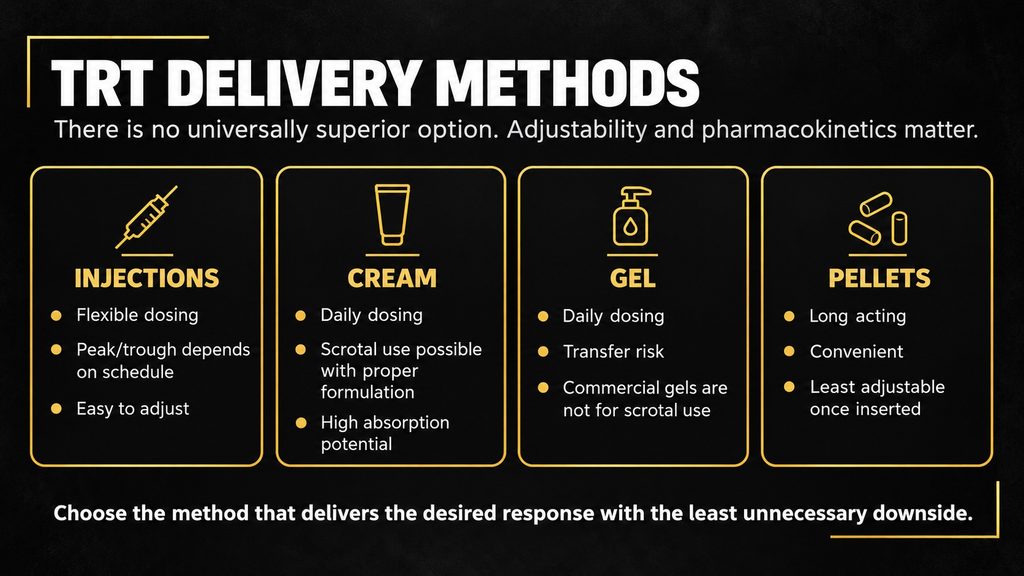
Injections are inexpensive, effective and easy to adjust. The major issue is pharmacokinetics. Larger injections given less frequently can produce a pronounced peak followed by a trough, while smaller and sometimes more frequent dosing may produce a flatter profile. Timing of blood work therefore matters enormously when interpreting testosterone levels in someone using injectable therapy.
Gels provide daily transdermal administration and generally create steadier exposure than widely spaced injections. They are convenient and readily adjustable, but absorption varies between individuals and there is a risk of transferring testosterone to another person through skin contact. Commercial testosterone gels are generally hydroalcoholic products and their prescribing instructions specifically say not to apply them to the penis or scrotum. The alcohol base is one reason genital application is inappropriate and potentially irritating, but more importantly, those products simply are not formulated or labeled for that route.
Testosterone cream is different. Alcohol-free compounded creams can be formulated for scrotal application under the direction of a knowledgeable clinician and compounding pharmacy. That route is interesting because scrotal skin is unusually thin and highly permeable to steroid hormones.
A pharmacokinetic study published in Andrology found that testosterone cream applied to scrotal skin produced a rapid, dose-dependent increase in serum testosterone using substantially less testosterone than was required through abdominal skin. In that experiment, the investigators estimated roughly eightfold greater bioavailability through scrotal skin compared with abdominal application. Testosterone peaked approximately two to three hours after application.
That efficiency can be an advantage. A much smaller amount of testosterone may be required to achieve the desired systemic exposure, the cream avoids the alcohol found in many commercial gels, and dosing can still be adjusted relatively quickly.
There is an important tradeoff. Scrotal skin contains substantial 5-alpha-reductase activity, so scrotal testosterone administration can produce relatively greater conversion to DHT. That is not automatically harmful, but it is another reason that formulation, dose, symptoms and blood work should be considered together rather than treating all topical testosterone products as interchangeable.
Pellets offer a very different tradeoff. They provide months of treatment without daily application or injections, which some men find extremely convenient. The disadvantage is adjustability. Once several months’ worth of testosterone have been implanted, the exposure cannot simply be reduced tomorrow because a blood test came back higher than anticipated.
That is one reason I favour starting conservatively and titrating intelligently. With injections or creams, changing the amount is relatively straightforward. With pellets, you have considerably less short-term control.
There is no universally superior delivery system. The best choice depends on absorption, preference, lifestyle, cost, response, tolerance and the ability to obtain the testosterone exposure that works for the individual without unnecessary side effects.
THE MUSCLE AND TENDON QUESTION
This may be one of the most interesting TRT questions for anyone who trains seriously.
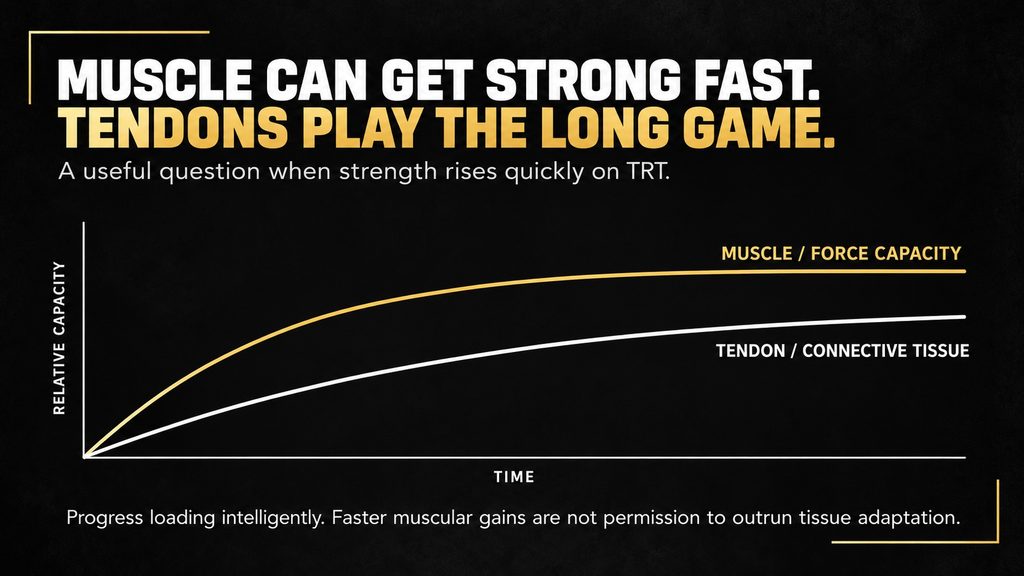
Testosterone can increase muscle mass and force production relatively quickly. Tendons adapt too, but muscle and connective tissue do not necessarily remodel at the same rate or in exactly the same way. That raises an intriguing question: can muscular strength sometimes improve faster than the tissues transmitting that force are prepared to tolerate it?
Anabolic steroid users have long appeared disproportionately represented among athletes suffering major pectoral, biceps, triceps, quadriceps and other tendon ruptures. Experimental studies have also reported changes in collagen organization and extracellular-matrix remodeling with supraphysiologic anabolic-androgenic steroid exposure. The literature is not perfectly consistent, however, and much of the mechanistic evidence comes from animal research.
That matters because anabolic-steroid abuse and properly prescribed testosterone replacement therapy are not the same exposure.
Still, newer observational data deserve attention. Large retrospective database studies have reported associations between prescription testosterone use and Achilles, distal-biceps and quadriceps tendon injuries. Those studies cannot prove that testosterone caused the injuries. Men receiving testosterone may strength train more frequently, lift heavier weights, differ in health status or possess other characteristics that contribute to the association.
The exact mechanism is also unresolved. I would therefore resist the simple statement that therapeutic TRT causes the tendons to become fibrotic, dense and brittle. Connective-tissue remodeling is a plausible part of the discussion, particularly with high androgen exposure, but the evidence does not yet allow us to draw that straight causal line.
The muscle-tendon mismatch is a more useful way to think about it. If muscular force capacity increases rapidly while tendon adaptation follows a different timeline, and the individual simultaneously begins lifting considerably heavier loads because he feels stronger, total stress on the system can rise very quickly.
That possibility becomes more relevant as replacement gradually turns into enhancement.
Years ago, in Are Tendon Ruptures Happening at a Greater Rate Today?, I questioned whether anabolic drug exposure and rapidly increasing muscular strength could contribute to tendon injuries. Our more recent tendon articles explore the subject in much greater depth (Part 1, Part 2, Part 3).
The practical lesson is straightforward. If TRT helps you become stronger, allow your training load to progress intelligently. Give connective tissue time to adapt, maintain appropriate mobility, and do not interpret faster muscular gains as permission to add weight to the bar faster than the rest of the body can tolerate.
More muscle provides little advantage when an injured tendon prevents you from using it.
WHY “MORE” BECOMES SO TEMPTING
This is the uncomfortable part of the TRT conversation in strength-training circles. A man starts treatment because he has poor libido, declining strength, low energy and repeatedly low testosterone. His symptoms improve, his training improves, he adds muscle, loses some fat and feels like himself again.
Then he discovers that more testosterone may produce more muscle. At that point, the objective can quietly shift from restoring physiological function to maximizing an anabolic response while the treatment is still being called “TRT.” That matters because dose-responsive muscle growth does not mean dose-responsive improvement in long-term health.
Increasing exposure may increase hematocrit, affect blood pressure, suppress fertility, alter hormone metabolites and produce other effects that need to be monitored. At progressively higher exposure, we also move farther away from the populations studied in the large safety trials that people often cite to defend TRT.
This is where optimal, not maximal becomes more than a slogan. Optimal is not necessarily a predetermined laboratory number. It is the amount that restores the desired physiological functions while keeping the complete picture favourable.
The strongest version of you is not necessarily the version with the highest testosterone concentration.
WHAT ABOUT TESTOGUARD?
We developed TestoGuard Formula specifically as an adjunct for people using testosterone therapy. The current formula contains milk thistle, N-acetyl-L-cysteine, stinging nettle root, tongkat ali, DIM, saw palmetto and boron.
TestoGuard is not a substitute for competent medical management, and it should never be used to justify an excessive testosterone dose. It cannot replace blood testing, blood-pressure monitoring, hematocrit management, prostate surveillance or appropriate dose adjustment.
This is especially important with testosterone pellets. Because pellets provide months of exposure and cannot be readily titrated after insertion, some men understandably look for additional ways to support themselves during therapy. An adjunct formula may have a place in that broader program, but if testosterone exposure itself is inappropriate, the solution remains medical reassessment of the dose, interval or delivery method.
The same applies to estradiol and DHT. The objective should not be to indiscriminately crush either hormone. They have physiological roles. Support should complement normal physiology, not wage war against it.
Support the system. Do not try to out-supplement a poorly designed TRT protocol.
HOW I WOULD APPROACH TRT TODAY
I would begin by determining whether there is a genuine clinical problem and whether reversible contributors can be corrected. Confirm the laboratory finding, investigate why testosterone is low, evaluate symptoms and discuss fertility before suppressing the reproductive axis.
Once therapy begins, I would pay attention to the entire response rather than obsess over one testosterone number. That includes total testosterone, free testosterone when appropriate, SHBG, estradiol, hematocrit, blood pressure, relevant prostate markers, sexual function, energy, body composition, training response and adverse effects. The timing of the blood draw must also make sense for the particular delivery method.
THE BOTTOM LINE
The modern testosterone story is considerably more encouraging than the one men were told several decades ago. Properly prescribed TRT does not appear to produce the cardiovascular catastrophe once feared, and current evidence does not support the old assumption that restoring testosterone automatically causes prostate cancer. In appropriately diagnosed men, TRT can improve sexual function, body composition, anemia, bone density and several aspects of quality of life.
Better evidence for TRT, however, should not become an excuse for reckless TRT. Testosterone is powerful. That is precisely why it deserves respect.
Correct the deficiency. Restore function. Monitor intelligently. Build strength. Protect the rest of the system.
Optimal, not maximal.
ADDITIONAL READING
For more background on testosterone, hormone optimization and connective-tissue health, see Live Longer with Testosterone Therapy, Are Tendon Ruptures Happening at a Greater Rate Today?, Tendon Training 2.0: Advanced Insights on Healing, Hormones, and Longevity, Tendon Training 3.0: The Science of Load, Healing, and Hormonal Balance, How to Restore Your Alpha Male Status, and Introducing Our New TestoGuard Formula.
REFERENCES
- Endocrine Society. Statement on Testosterone Replacement Therapy. July 16, 2026.
- Bhasin S, Brito JP, Cunningham GR, et al. Testosterone Therapy in Men With Hypogonadism: An Endocrine Society Clinical Practice Guideline. Journal of Clinical Endocrinology & Metabolism. 2018;103(5):1715-1744.
- Grober ED, Krakowsky Y, Khera M, et al. Canadian Urological Association guideline on testosterone deficiency in men: Evidence-based Q&A. Canadian Urological Association Journal. 2021;15(5):E234-E243.
- American Urological Association. Evaluation and Management of Testosterone Deficiency: AUA Guideline.
- Levy A, Hansen LS, Abu Ahmad W, et al. Temporal trends in total and free testosterone (1972-2019): a systematic review and meta-trend analysis. Human Reproduction. 2026;41(Suppl 1):deag083.202.
- Travison TG, Vesper HW, Orwoll E, et al. Harmonized Reference Ranges for Circulating Testosterone Levels in Men of Four Cohort Studies in the United States and Europe. Journal of Clinical Endocrinology & Metabolism. 2017;102(4):1161-1173.
- Lincoff AM, Bhasin S, Flevaris P, et al. Cardiovascular Safety of Testosterone-Replacement Therapy. New England Journal of Medicine. 2023;389:107-117.
- U.S. Food and Drug Administration. FDA issues class-wide labeling changes for testosterone products. February 28, 2025.
- U.S. Department of Health and Human Services. HHS Announces Requested Updates to Testosterone Therapy Product Labels. June 18, 2026.
- Bhasin S, Travison TG, Pencina KM, et al. Prostate Safety Events During Testosterone Replacement Therapy in Men With Hypogonadism: A Randomized Clinical Trial. JAMA Network Open. 2023;6(12):e2348692.
- Snyder PJ, Bhasin S, Cunningham GR, et al. Effects of Testosterone Treatment in Older Men. New England Journal of Medicine. 2016;374:611-624.
- Pencina KM, Travison TG, Artz AS, et al. Efficacy of Testosterone Replacement Therapy in Correcting Anemia in Men With Hypogonadism: A Randomized Clinical Trial. JAMA Network Open. 2023;6(10):e2340030.
- Snyder PJ, Bauer DC, Ellenberg SS, et al. Testosterone Treatment and Fractures in Men with Hypogonadism. New England Journal of Medicine. 2024;390:203-211.
- American Urological Association / American Society for Reproductive Medicine. Diagnosis and Treatment of Infertility in Men: AUA/ASRM Guideline (2020; amended 2024).
- Coviello AD, Matsumoto AM, Bremner WJ, et al. Low-dose human chorionic gonadotropin maintains intratesticular testosterone in normal men with testosterone-induced gonadotropin suppression. Journal of Clinical Endocrinology & Metabolism. 2005;90(5):2595-2602.
- Hsieh TC, Pastuszak AW, Hwang K, Lipshultz LI. Concomitant intramuscular human chorionic gonadotropin preserves spermatogenesis in men undergoing testosterone replacement therapy. Journal of Urology. 2013;189(2):647-650.
- Bhasin S, Woodhouse L, Casaburi R, et al. Testosterone dose-response relationships in healthy young men. American Journal of Physiology-Endocrinology and Metabolism. 2001;281(6):E1172-E1181.
- Bhasin S, Storer TW, Berman N, et al. The Effects of Supraphysiologic Doses of Testosterone on Muscle Size and Strength in Normal Men. New England Journal of Medicine. 1996;335:1-7.
- Rebello E, Albright JA, Testa EJ, et al. The use of prescription testosterone is associated with an increased likelihood of experiencing a distal biceps tendon injury and subsequently requiring surgical repair. Journal of Shoulder and Elbow Surgery. 2023;32(6):1254-1261.
- Testosterone replacement therapy is associated with increased odds of Achilles tendon injury and subsequent surgery: a matched retrospective analysis. 2023.
- Testosterone Therapy Is Associated With Increased Odds of Quadriceps Tendon Injury. Clinical Orthopaedics and Related Research. 2023.
- Jones IA, Togashi R, Hatch GFR, Weber AE, Vangsness CT. Anabolic steroids and tendons: A review of their mechanical, structural, and biologic effects. Journal of Orthopaedic Research. 2018;36(11):2830-2841.
- Rastrelli G, Antonio L, Carrier S, Isidori A, Maggi M. The hormonal regulation of men’s sexual desire, arousal, and penile erection: recommendations from the fifth International Consultation on Sexual Medicine. Sexual Medicine Reviews. 2025;13(4):433-455.
- Iyer R, Mok SF, Savkovic S, et al. Pharmacokinetics of testosterone cream applied to scrotal skin. Andrology. 2017;5(4):725-731.
- Handelsman DJ, Conway AJ, Boylan LM. Pharmacokinetics and pharmacodynamics of testosterone pellets in man. Journal of Clinical Endocrinology & Metabolism. 1990;71(1):216-222.

Dirty Dozen, Clean Fifteen: When Is Organic Produce Really Worth It?
Not all produce carries the same pesticide burden. Learn when buying organic makes the biggest difference, what the 2026 Dirty Dozen and Clean Fifteen reveal, and how to reduce pesticide exposure without eating fewer fruits and vegetables.

Why You Wake Up at 3 A.M.: The Ultimate Guide to Staying Asleep All Night
Waking up in the middle of the night becomes more common with age, and the fix is not always the same as the one for falling asleep. Learn the most effective strategies for sleep maintenance, from dinner timing and supplement support to a promising new ketone experiment for people who cannot stay asleep.

55: Don’t Let the Old Man In
At 55, the grey hair may suggest one thing, but strength, leanness and physical capability can tell another story. A personal look at aging, health, discipline and the habits that keep the “old man” outside the door.