
What Getting Older Has Taught Me About Health, Strength and Practicing What You Preach
Last week, I turned 55. Lately, I can’t tell you how many people have approached me with some version of the same question: “If you don’t mind me asking, how old are you?”
I know why they’re asking. The grey hair and a few wrinkles suggest one thing, while my body composition and physical capabilities suggest something else. The two don’t seem to match.
I take that as a compliment, but I also take it as confirmation of something I’ve believed for a long time: age is a number, but how you age is influenced enormously by what you do with the years.
There’s a line that has stuck with me for a long time, and I try to live its message every day:
“Don’t let the old man in.” — Clint Eastwood
That doesn’t mean pretending I’m 25 or denying the realities of aging. I’m not interested in fighting the grey hair or every wrinkle that comes with another year. What I’m not prepared to surrender without a fight is my strength, muscle, mobility, energy and ability to do the things I enjoy.
A Compliment, Sort Of — Ten Years Later
There’s something fitting about writing this article now because nearly ten years ago I wrote A Compliment, Sort Of.
My wife Mary and I were at a party when someone we hadn’t seen for a while noticed the grey beginning to appear in my hair and asked how old I was. I was approaching 45 at the time. He told me I looked great for my age and joked to Mary that it must be nice having a husband with a body like that.
Without missing a beat, she replied, “He’s got the body of a 20-year-old, but the mind of a 60-year-old!”
She wasn’t entirely wrong. I’ve never been much of a party animal. I value sleep, like routine, train consistently and generally eat well. I don’t need to stay out until two in the morning simply because it’s Saturday, and I don’t spend half the following week recovering from the weekend. At 25, some of those habits might have seemed boring. At 55, the return on investment is becoming increasingly obvious.
The interesting part is that the same basic conversation is happening again a decade later. There is considerably more grey now, but people are still asking the age question because what they see above the neck doesn’t seem to match what they see below it.
One quote captures that better than just about anything else:
“What you do in private shows in public.”
People see the result. They don’t see the thousands of workouts, meals, early nights, decisions and routines behind it. They see what you look like and what you can do at 55; they don’t see what you consistently did at 35, 40, 45 and 50. There is no dramatic secret. It is simply the accumulated effect of ordinary decisions repeated for a very long time.
I Should Have Been Dead By Now
Another older article has taken on even greater significance with age: I Should Have Been Dead By Now.
My father died of colon cancer at only 41. That family history once complicated a life-insurance application and resulted in additional screening before I could be approved. Fortunately, the colonoscopy came back clean.
The title of that article was intentionally provocative, but the underlying message was serious. Family history matters, but I have never believed that genetics automatically dictate destiny.
I’m more nuanced about that today. Lifestyle is not a guarantee. You can exercise, eat well, sleep properly and do almost everything right and still develop disease. Genetics, environment, medical history and plain bad luck all play roles that we cannot completely control.
But there is an enormous difference between not having complete control and having no influence whatsoever.
I cannot change my father’s history. I can choose how I live. I can train, maintain a healthy body composition, pay attention to nutrition and sleep, get appropriate medical screening and take responsibility for the things that are within my control.
And there is one fact that gives 55 a little more weight for me: my father never reached this age. That doesn’t make me afraid of getting older. Quite the opposite. It makes me appreciate the privilege of being able to do it.
The Real Luxury
That perspective may be why another quote hit me particularly hard recently:
“Never forget: It’s a luxury to have zero health problems.”
Most of us can find plenty to worry about on any given day—work, money, deadlines, traffic, relationships, bills and all the little frustrations that somehow occupy so much mental space. Then a serious health problem enters the picture and the hierarchy changes very quickly.
As I put it in a recent post, you can have a hundred problems until you have a serious health problem. Then you have one.
Good health is easy to take for granted because, when everything is working properly, health is almost invisible. You get out of bed, walk downstairs, train, drive, work, travel and go about your day without thinking much about the physical machinery allowing you to do any of it.
It is often only when something stops working that the ordinary suddenly looks extraordinary.
That is what I mean when I call good health a luxury. It isn’t something we are automatically entitled to, and it certainly isn’t something we can guarantee. But when you have it, you should recognize its value and do what you reasonably can to protect it.
Age Is a Number. Your Habits Are Not.
I still want to be strong at 55. I still want muscle. I still want to be lean and physically capable. But those things mean something different to me now than they did when I was younger.
Strength is no longer only about the number on the bar. It represents capacity. Muscle provides physical reserve. Mobility gives you options. Fitness allows you to participate in life rather than watch from the sidelines.
I’m not training because I’m desperately trying to hold onto 25. I’m training because I care about what 65, 75 and hopefully beyond will look like.
That is why I’m also careful with the phrase “age is just a number.” Aging is real. Recovery changes. Injuries accumulate. Muscle becomes harder to maintain, and you don’t have the same margin for error forever.
At the same time, I think we often blame aging for changes that are partly the result of years of inactivity, poor nutrition, excess body fat, inadequate sleep and gradually lowered expectations. If you stop challenging your body because you are getting older, over time it will accommodate the request. Use it or lose it!
The old man may eventually get in. There’s no beating the clock. You just don’t have to open the door for him.
Practice What You Preach
I’ve spent decades telling people that training, nutrition, recovery and lifestyle matter. At some point, you have to demonstrate that those principles aren’t merely things you tell other people to do.
That doesn’t mean appearance is proof of perfect health. It isn’t. A lean physique cannot tell you somebody’s bloodwork, medical history or what is happening internally.
But I do believe in leading by example. If I tell someone strength is important as they age, I intend to remain strong. If I tell them maintaining muscle matters, I intend to maintain mine. If I preach consistency, sleep, nutrition and discipline, then those principles need to exist in my life when nobody is watching.
Don’t Teach Health If You Do Not Represent Health!
Maybe that’s why people keep asking my age. The hair says one thing. The body says another. I’m perfectly happy with that contradiction.
I don’t need anyone to think I’m younger than I am. I’m 55, and I’m fortunate to be here. What interests me is showing what can still be possible when you continue giving your body reasons to remain strong, lean, mobile and capable.
The Bottom Line
Turning 55 hasn’t made me want to be younger. It has made me more appreciative of being healthy.
I know enough now to understand that I cannot guarantee what happens next. No diet, training program, supplement or lifestyle makes anyone bulletproof. But uncertainty is not an excuse to neglect the enormous number of choices we still get to make.
So I’ll keep training, protecting my sleep, eating well, monitoring my health and doing what I can to preserve the strength and independence I’m fortunate enough to have. Most importantly, I’ll continue trying to practice what I preach—not because I’m trying to stop the clock, but because while it’s running, I intend to keep living well.
The grey hair will get greyer. More wrinkles will come. The number will keep climbing.
That’s okay. At 55, my objective is not to stop getting older. It’s to make getting older work as hard as possible to catch me.
Don’t let the old man in.
Additional Reading
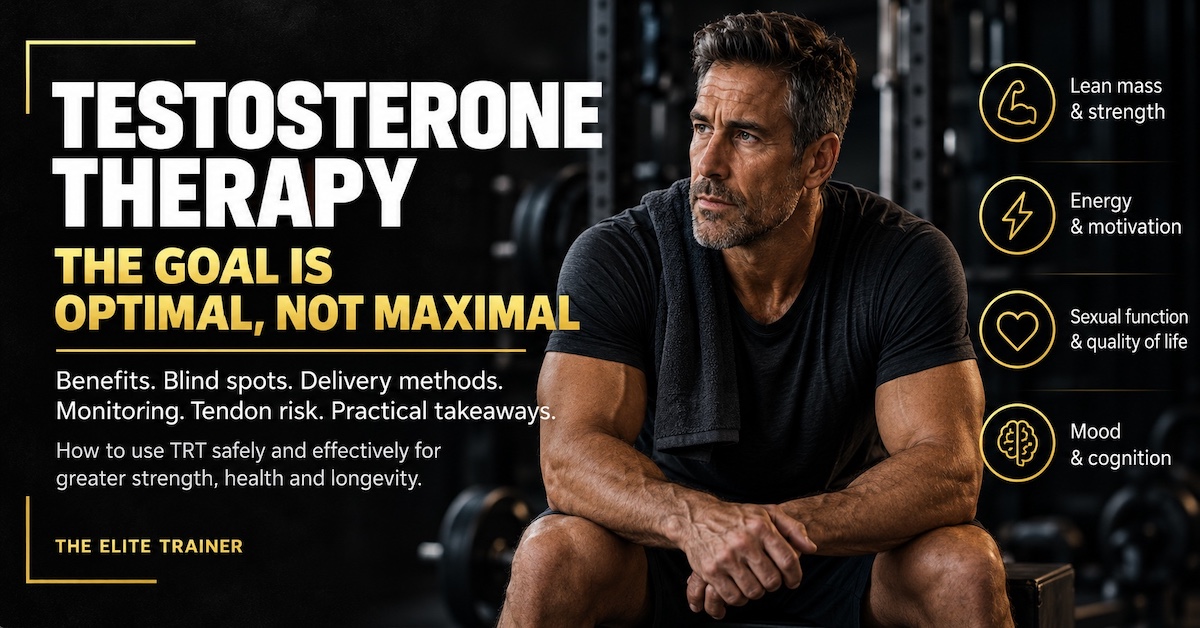
Testosterone Therapy: The Goal Is Optimal, Not Maximal
Testosterone therapy can improve strength, body composition, sexual function and quality of life, but more is not always better. Learn what the latest evidence says about optimal testosterone levels, estradiol, injections, creams, gels, pellets, cardiovascular and prostate health, fertility, tendon risk and intelligent TRT monitoring.
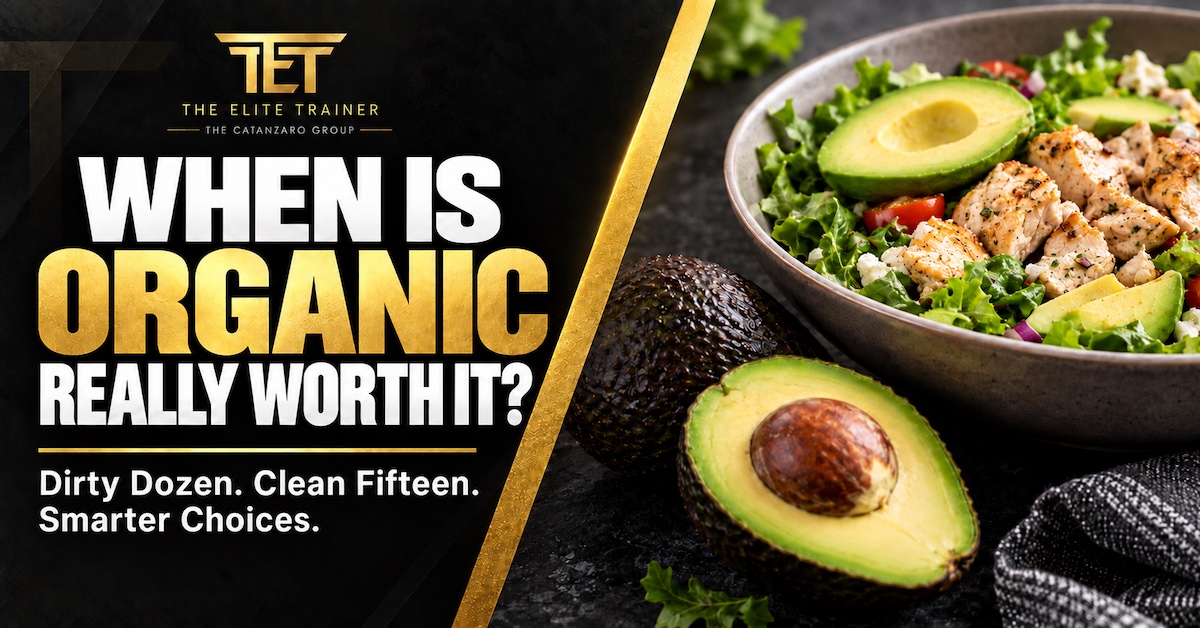
Dirty Dozen, Clean Fifteen: When Is Organic Produce Really Worth It?
Not all produce carries the same pesticide burden. Learn when buying organic makes the biggest difference, what the 2026 Dirty Dozen and Clean Fifteen reveal, and how to reduce pesticide exposure without eating fewer fruits and vegetables.
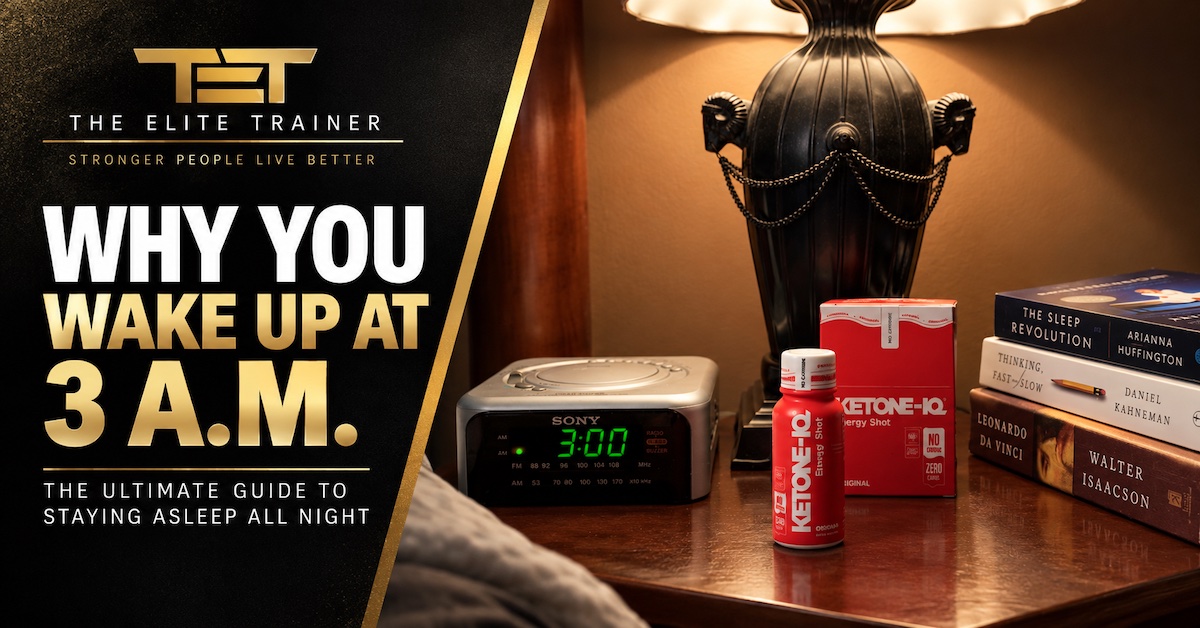
Why You Wake Up at 3 A.M.: The Ultimate Guide to Staying Asleep All Night
Waking up in the middle of the night becomes more common with age, and the fix is not always the same as the one for falling asleep. Learn the most effective strategies for sleep maintenance, from dinner timing and supplement support to a promising new ketone experiment for people who cannot stay asleep.
follow
Error: No feed with the ID 2 found.
Please go to the Instagram Feed settings page to create a feed.